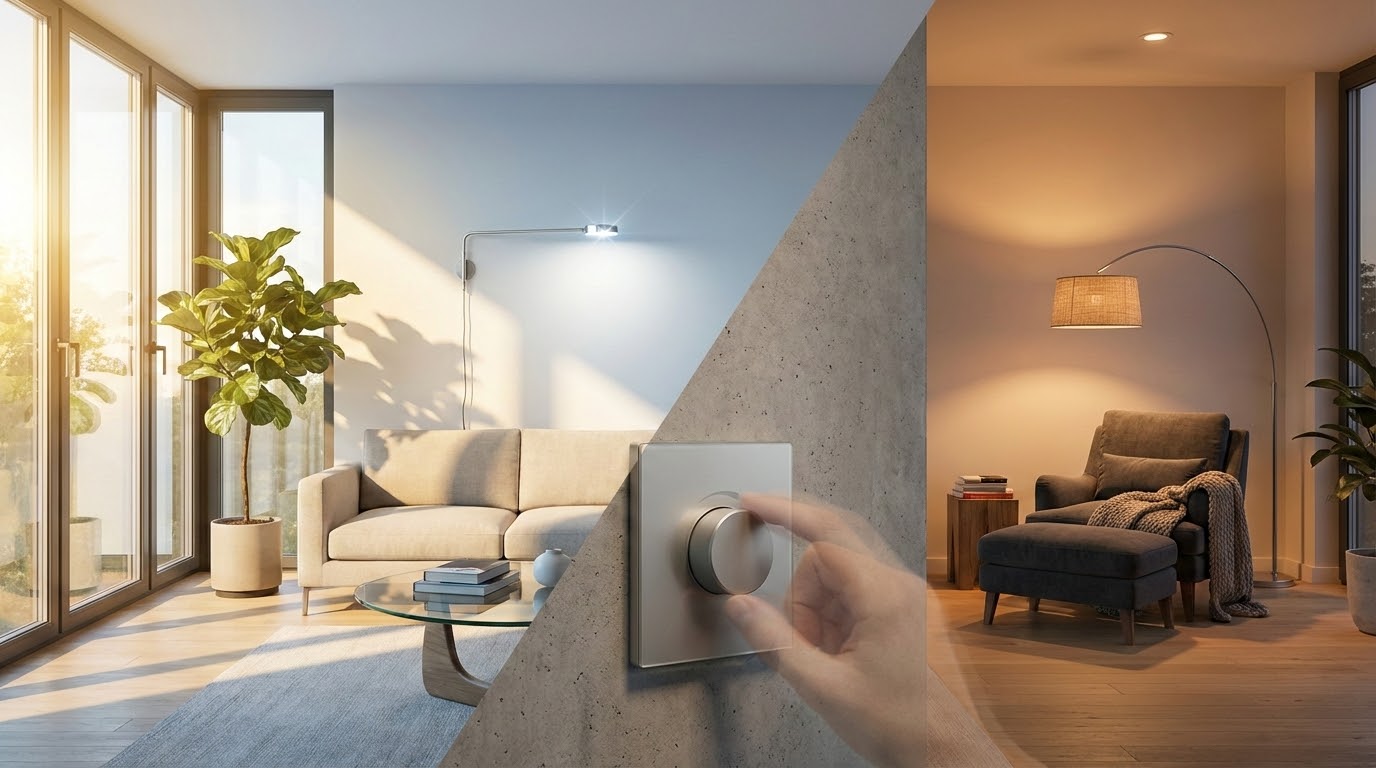
Have you ever noticed how a bright, sunny morning can instantly lift your mood? Or how a softly lit room helps you unwind after a long day? The illumination in your living space does much more than just help you see. It plays a powerful role in shaping your daily experience.
This guide explores how thoughtful illumination choices can dramatically improve your environment. The right approach to illumination affects everything from your sleep patterns to your productivity levels. It even influences your body’s natural biological rhythms throughout the day.
Modern homes are increasingly recognizing the value of adjustable illumination systems. These systems allow you to create the perfect atmosphere for any activity or time of day. They represent a simple yet profound way to enhance your quality of life.
We’ll show you how to make smart decisions about your home’s illumination. You’ll discover practical ways to align your illumination with your personal wellness goals. This creates beautiful, functional spaces that support your overall well-being.
Key Takeaways
- Lighting choices directly impact your mood, energy levels, and sleep quality
- Adjustable lighting systems help align your environment with your body’s natural rhythms
- The right illumination can transform any room into a more functional and comfortable space
- Thoughtful lighting decisions support both physical and mental wellness goals
- Modern dimmable options offer flexible control over your home’s atmosphere
- Color temperature selection plays a crucial role in creating the desired ambiance
- Smart technology integration makes personalized lighting easier than ever before
Introduction: Lighting and Wellness
The connection between your living space’s illumination and your personal health runs deeper than most realize. It’s not just about seeing clearly—it’s about feeling your best throughout each day.
Our bodies evolved over thousands of years to respond to natural light patterns. Sunrise and sunset guided our ancestors’ daily rhythms. Today, artificial illumination can either support or disrupt these natural cycles.
Research shows that exposure to bright light triggers serotonin production. This neurotransmitter boosts happiness and promotes positive outlook. Proper illumination creates spaces where people feel genuinely better both mentally and physically.
The wellness movement now recognizes illumination as a critical environmental factor. It deserves the same careful consideration as air quality and ergonomics in home design.
Understanding how light affects your body and mind empowers smarter choices. You can create environments that actively support your health goals rather than accidentally working against them.
This approach goes beyond aesthetics or energy efficiency. Thoughtful illumination creates spaces where families thrive, sleep improves, and daily life feels more balanced. It’s about designing environments that nurture your overall well-being.
Natural Light and the Circadian Rhythm
Before electricity transformed our nights, people lived according to nature’s schedule. Sunrise and sunset dictated activity and rest periods for thousands of years.
Our bodies run on a biological 24-hour cycle called the circadian rhythm. A tiny brain region called the suprachiasmatic nucleus acts as our master clock. It receives light signals directly from the eyes to determine the time of day.
Mid-day sun produces white light that promotes alertness and energy. Sunset’s warm glow signals the body to begin winding down for restorative sleep. This natural progression perfectly supports our internal circadian rhythm.
Modern indoor lifestyles have disconnected many people from adequate natural light exposure. This disruption can lead to sleep problems and fatigue. Maximizing daytime bright light exposure properly sets your body’s internal clock.
Understanding your circadian rhythm helps make informed decisions about artificial light. Even brief periods of natural light during the day significantly benefit circadian health. Simple strategies like positioning workspaces near windows can make a real difference.
Dimmable Lighting for Wellness: Enhancing Sleep and Energy
Research reveals that the right evening illumination can cut the time it takes to fall asleep by nearly 20 minutes. Harvard studies show people exposed to warm, softened illumination in the evening achieve better sleep much faster than those under bright, cool sources.
Your body’s natural sleep hormone, melatonin, begins production as darkness approaches. The pineal gland responds to reduced light levels by releasing this crucial chemical. It prepares your system for restorative rest each night.
Artificial illumination after sunset can disrupt this delicate process. It suppresses melatonin production and activates stress responses when your body should be calming down. This disruption pushes your natural rhythm out of sync with your environment.
Adjustable systems create “electronic sunsets” that mimic nature’s patterns. They gradually decrease intensity during evening hours, signaling your body to begin melatonin production. This approach supports your circadian rhythm naturally.
These systems offer flexibility for different times of day. Bright, energizing environments support alertness during morning and afternoon hours. Softer, sleep-promoting illumination takes over as bedtime approaches.
Investing in quality adjustable illumination represents one of the most effective wellness interventions available. The benefits extend beyond improved sleep to include better mood, cognitive function, and overall health.
The Science Behind LED and Dimming Technology
Advanced lighting products now offer capabilities that were unimaginable just a decade ago. Modern LED technology provides unprecedented control over light intensity and color quality. These innovations create environments that support both comfort and well-being.
The SunWave™ series achieves remarkable 95% similarity to natural sunlight. This full-spectrum technology renders colors with exceptional accuracy. It significantly reduces eye strain during extended exposure periods.
Flicker-free operation is crucial for quality illumination. High-end LED systems maintain maximum 8% fluctuation depth. This eliminates the subtle flickering that can cause headaches and fatigue.
Color Rendering Index (CRI) ratings measure how accurately light reveals colors. CRI 98 products represent the gold standard for premium applications. They render skin tones naturally and create vibrant, true-to-life environments.
Modern dimming technology allows seamless intensity adjustments without buzzing or color shifting. Energy-efficient 16W LED bulbs produce equivalent output to much higher wattage traditional options. Investing in quality LED technology protects eye health while supporting sustainability goals.
Choosing the Right Color Temperature for Your Space
Color temperature represents one of the most overlooked yet impactful elements in creating the right atmosphere. The warmth or coolness of your light sources dramatically affects how you feel in different spaces throughout your home.
Measured in Kelvins (K), this scale ranges from warm candlelight around 1500K to cool blue-toned light above 6500K. Understanding these measurements helps you select the perfect ambiance for each room.
Warm light in the 2700K-3000K range creates a cozy, sunset-like glow that promotes relaxation. This color temperature signals your body to produce melatonin, making it ideal for bedrooms and living areas where comfort matters most.
Cool light between 4000K-6500K mimics midday sunlight and boosts alertness. This temperature range supports concentration and productivity by suppressing sleep hormones. It works perfectly in workspaces and kitchens.
Sleep experts typically recommend 2700K for bedrooms, 3000K for living spaces, and 4000K-5000K for task-oriented environments. Matching color temperature to room function ensures each space supports your intended activities.
Consider using tunable white LED systems that adjust throughout the day. These innovative solutions transition from energizing cool light in the morning to relaxing warm light as evening approaches. Selecting appropriate color temperatures proves just as important as intensity control when designing supportive environments.
Smart Switches and Modern Lighting Solutions
Today’s smart home technology brings unprecedented control to your living environment. These advanced systems go beyond traditional dimmers by offering programmed scenes and automated schedules.
Smart products like Philips Hue create custom scenarios for different times of day. You can enjoy energizing morning routines with bright, cool lights. Focused work illumination supports productivity during midday hours. Relaxing evening ambiance prepares your body for restful sleep.
One remarkable feature is the “electronic sunrise” that gently brightens over 30-45 minutes before wake time. This natural awakening reduces morning grogginess compared to jarring alarms.
Modern LED systems now integrate light therapy capabilities. They provide therapeutic bright exposure to combat seasonal affective disorder. This technology improves mood during darker winter months.
Voice control and app management offer incredible convenience. Adjust your entire home illumination from bed or create automatic schedules. Smart switches provide unmatched flexibility for wellness-optimized environments.
While representing a higher initial investment, these products adapt to changing needs throughout seasons. Many systems include circadian rhythm features that automatically adjust settings. This puts supportive illumination on autopilot for daily well-being.
Designing a Sleep-Friendly Home Lighting Setup
Many people struggle to fall asleep without realizing their bedroom illumination might be working against them. A smart approach uses three distinct layers to create the perfect sleep environment.
The foundation is ambient illumination with adjustable controls for overall room brightness. Task illumination serves specific needs like bedside reading. Accent sources add character without compromising sleep quality.
Blue light exposure before bed presents a significant challenge. Research shows it suppresses melatonin production twice as long as other wavelengths. This directly impacts your ability to fall asleep quickly.
Practical strategies make a real difference. Activate night mode on devices 2-3 hours before bedtime. Consider blue-light blocking glasses for evening use. Choose red or orange reading lamps that emit minimal sleep-disrupting wavelengths.
Your sleep system remains surprisingly sensitive to even minimal light at night. Just eight lux—about twice a night light’s output—can suppress melatonin. This fragments sleep quality throughout the night.
Comprehensive blackout solutions blocking 99% of external light create optimal conditions. Properly fitted curtains with side channels eliminate light leakage around edges.
Bedroom illumination should exclusively use warm white temperatures between 2700-3000K. This creates a cozy atmosphere signaling rest rather than activity. Eliminate all standby lights from electronics for complete darkness.
These careful choices transform your bedroom into a true sanctuary for restorative sleep. They support healthy sleep-wake cycle patterns and contribute to better sleep overall.
Leveraging Lighting for Improved Mood and Productivity
Strategic light choices throughout your day create powerful effects on how you feel and how much you accomplish. The right approach extends beyond sleep optimization to significantly impact daily mood and cognitive performance.
Philips research demonstrates that bright, cool illumination in the 5000K-6500K range can boost productivity by up to 23%. This makes proper light exposure a powerful tool for home offices and task-focused spaces.
Adequate daytime illumination serves dual purposes. It maximizes alertness during waking hours while strengthening circadian rhythms for better sleep at night. University of Washington found insufficient natural light disrupts daily rhythms, causing people to stay up later.
Different activities benefit from tailored approaches. Intense, cool light supports focused work. Moderate neutral light works for general activities. Gradually dimming warm light signals evening transition.
Seasonal affective disorder affects many during darker winter months. Light therapy devices providing 10,000 lux exposure combat mood disruptions and fatigue effectively.
Proper illumination boosts glutamate levels, a neurotransmitter essential for learning and memory. Optimizing for mood and productivity means matching intensity and color temperature to the time of day.
Create dedicated well-lit zones for high-concentration activities. Ensure these spaces receive abundant natural light or supplemental bright artificial sources. This maintains peak alertness and cognitive function throughout your day.
Integrating Wellness Lighting Across Different Spaces
Creating a harmonious environment throughout your living space requires tailoring your light sources to match each area’s specific needs. Each room serves unique functions that benefit from customized illumination strategies.
Living areas like family rooms thrive with warm, inviting light. Combine ambient fixtures, task lamps, and accent lights for layered effects. This approach creates comfortable environments for relaxation and social activities.
Workspaces demand cooler, brighter illumination to promote focus. Position desk lamps to minimize glare and eye strain. Proper task lighting supports productivity during work hours.
Kitchens benefit from neutral to cool light that aids food preparation. Bathrooms need bright illumination around mirrors for grooming. Both spaces can incorporate adjustable options for different times of day.
Various lighting fixtures serve distinct purposes throughout your home. Recessed lights provide general illumination. Pendant lights and lamps offer targeted task lighting. Wall sconces create visual interest and layered effects.
Consider using BR30 LED bulbs with wide beam angles for recessed applications. These cast light over large areas effectively. They work well for general room illumination in various spaces.
Consistency matters when moving from active daytime areas to relaxing evening spaces. Gradual transitions create cohesive environments. Strategic bulb replacement and fixture additions can transform existing homes.
Conclusion
Your daily experience of light shapes more than just visibility—it orchestrates your body’s essential functions throughout each day.
Thoughtfully designed systems that support your natural circadian rhythm represent some of the most impactful investments in personal wellness. The right approach transforms how you feel and function in your home environment.
Remember the key principles: maximize natural light exposure during daytime hours. Transition to warm, softened illumination as evening approaches. Match color temperature to both space function and time of day.
Modern dimmable LED products and smart technology make wellness-optimized environments accessible to everyone. These solutions work with your lifestyle rather than against it.
View these upgrades as investments in quality of life rather than mere home improvements. Better sleep, stable mood, and enhanced productivity deliver returns that far exceed initial costs.
Even small changes can yield significant benefits. Start with simple adjustments like adding controls or establishing better evening habits.
Taking control of your light environment means taking control of a fundamental wellness factor. The time to begin optimizing this powerful element is now.