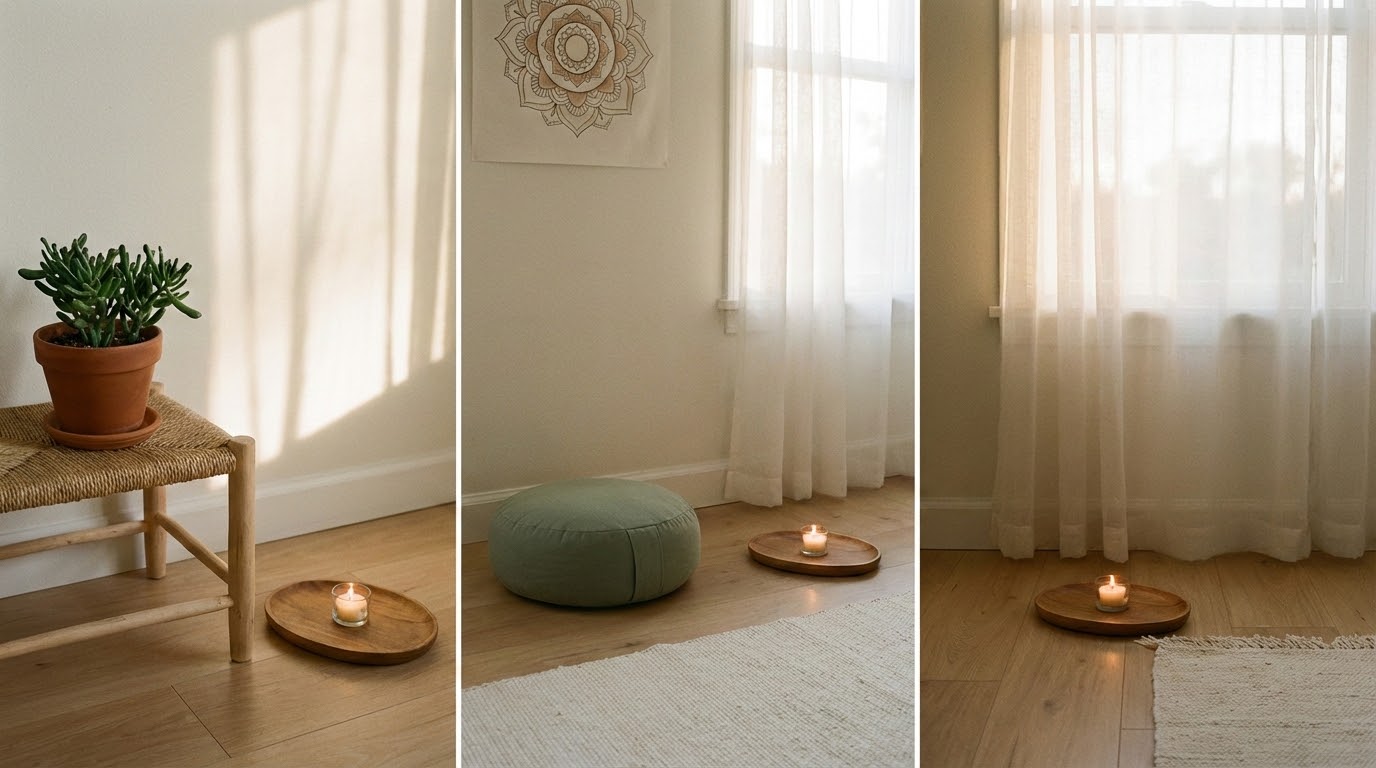
Welcome to your complete guide for designing a personal sanctuary that supports your journey toward tranquility. Many people believe they need a massive house or special room to create such an area. This simply isn’t true.
Thoughtful intention and smart design can transform any spot into a peaceful retreat. You don’t need a big budget or dedicated area. Even the smallest corner can become your special place for quiet reflection.
This article walks you through choosing the perfect location and adding natural touches that promote calm. You’ll discover practical room ideas and design principles that really work. We’ll also tackle common challenges you might encounter.
Our guide draws from real experiences and expert insights to help elevate your personal practice. You’ll find actionable tips suitable for various living situations and budgets. Every suggestion aims to maintain a serene atmosphere that feels uniquely yours.
Key Takeaways
- Any area in your residence can become a tranquil sanctuary with thoughtful planning
- Natural elements significantly enhance the calming atmosphere of your designated area
- Practical design principles work for various budgets and living arrangements
- Even unconventional spots can be transformed into effective quiet zones
- Expert insights help overcome common challenges in personal sanctuary creation
- Simple adjustments can dramatically improve your daily quiet practice
- Personal preference plays a crucial role in designing your ideal retreat
Introduction: Embracing Your Journey to Inner Peace
Modern life’s constant demands make developing personal tranquility more important than ever before. In our hectic world, finding calm within your residence has become essential for mental well-being.
Headspace co-founder Andy Puddicombe offers transformative insight: “You have to get comfortable with the mind as it is. Whether it’s a busy mind or a quiet mind. Thoughts you like, thoughts you don’t like.” This approach reshapes how we view meditation.
Many beginners believe meditation requires emptying the mind completely. Instead, it’s about being present with uncomfortable thoughts. Embracing patience and stillness forms the true core of mindfulness.
Recent years have increased anxiety for many people. A dedicated meditation practice provides valuable tools for stress management. Regular commitment yields transformative results for mood improvement.
True happiness isn’t found in future achievements or external validation. It emerges through learning present-moment awareness. Creating a special area for your practice represents a physical commitment to this inner peace journey.
Why Create a Dedicated Meditation Space?
Your brain responds remarkably well to environmental cues when developing a regular practice. When you consistently use the same spot, it becomes a powerful mental anchor. This association helps you transition more easily into a calm, focused state.
The science behind this is fascinating. Your mind creates strong connections between location and activity. Returning to your special area signals your brain that it’s time for mindfulness. This mental shortcut makes starting your routine much simpler.
A designated zone also serves as a visual reminder to maintain consistency. Seeing your prepared area encourages you to stick with your practice. This helps build a sustainable habit even during busy periods.
Think about other dedicated areas in your residence. Your work desk supports productivity, while your exercise mat signals fitness time. Similarly, a personal retreat minimizes distractions for deeper sessions. It becomes your sanctuary for peace and reflection.
This consistency creates a sense of ritual that honors your commitment. Your special corner becomes devoted entirely to mental wellness. This physical dedication supports your inner journey beautifully.
Choosing the Ideal Location for Your Meditation Space
Finding the right spot for your practice begins with practical assessment rather than perfection. You don’t need an ideal room—just the best available area that supports regular commitment.
Focus on three key criteria: quietness, natural illumination, and adequate room. Choose the quietest corner in your residence, away from busy zones like kitchens. Avoid external noise sources near street-facing windows.
Natural lighting transforms your experience beautifully. East-facing spaces work wonderfully for morning sessions. North-facing areas provide consistent, gentle illumination throughout the day.
You need less room than you might imagine. A minimum area of 4×4 feet allows comfortable sitting with basic accessories. This compact footprint makes almost any corner viable.
Get creative with available options. Transform a bedroom nook or use room dividers for privacy. Window-adjacent spots maximize natural benefits. Even unused closet space can become your special place.
Here’s a simple test: if you can roll out a yoga mat undisturbed for 10-30 minutes, the location works. For shared living situations, folding screens create temporary seclusion. Establishing quiet hours with household members ensures peaceful practice time.
Essential Elements for a Functional Meditation Environment
Building a dedicated area for quiet reflection involves more than just finding the right location. Thoughtful selection of key components transforms any corner into an effective retreat.
Comfortable seating forms the foundation of your practice area. A meditation cushion provides optimal spine alignment for traditional sitting. For those with knee concerns, a meditation bench reduces strain while maintaining proper posture.
Lighting significantly impacts your environment’s atmosphere. Position your area near windows to harness natural illumination. Use sheer curtains to soften harsh sunlight and create gentle diffusion.
Artificial lighting options include warm-toned bulbs between 2,700-3,000K. Dimmer switches allow adjustable brightness levels. Salt lamps or flameless candles add soothing ambient glow.
Sound management involves both absorption and enhancement. Soft textiles like rugs and wall hangings reduce echo. Small water features or Bluetooth speakers can enrich your auditory experience.
Aromatherapy introduces calming scents through essential oils. Lavender promotes relaxation while frankincense offers grounding. Sandalwood enhances focus during your sessions.
Air quality matters for respiratory comfort during deep breathing. Regular window ventilation refreshes the atmosphere. Indoor plants naturally purify your environment.
Remember that you don’t need all these items immediately. Start with basic elements like a comfortable cushion and gradually add components as your practice deepens.
Incorporating Natural Elements for a Calming Ambiance
Nature possesses an innate ability to soothe our minds and restore inner calm. These natural elements create an environment that supports deep relaxation and focus.
While meditating outdoors would be ideal, urban living often makes this challenging. Bringing nature indoors becomes the perfect solution for creating harmony.
Adding simple touches like plants and stones instantly transforms your area. These elements establish a beautiful balance between your indoor environment and the natural world.
Choose items that bring you personal joy. Consider potted plants, decorative branches, or small succulent gardens. Jars filled with sand or seashells also work wonderfully.
Even a compact space can accommodate these natural touches. Built-in shelving displays multiple items without crowding your area. This approach maximizes your available room beautifully.
These natural elements serve as grounding focal points during your practice. They create a sense of connection to the outdoors. This enhances the quality of your mindfulness sessions significantly.
Designing a Personalized Meditation Altar
A personal altar can serve as a powerful visual anchor for your mindfulness routine. This optional addition creates a meaningful focal point that deepens your practice sessions.
Position your altar at eye level when seated. This placement ensures optimal visual connection during your quiet time. Choose a small table or shelf as the foundation.
Begin by selecting a central item that reflects your spiritual focus. This could be a statue, meaningful symbol, or inspirational artwork. Arrange other pieces so each side mirrors the other.
This visual balance promotes a sense of calm and symmetry. Include key elements like candles or electric alternatives for gentle illumination. Natural touches such as stones or plants add grounding energy.
Personalize your arrangement with items that resonate personally. Consider essential oil diffusers, bells, chimes, or mala beads. Choose objects that soothe your body and relax your mind.
Avoid overcrowding your designated area. Select only a few carefully chosen pieces at a time. Swap items periodically to maintain fresh energy and prevent visual clutter.
Remember that every object should earn its place by enhancing your practice. Each piece should support rather than distract from your mindfulness journey.
Implementing Minimalism and Decluttering Techniques
The most effective approach to designing your personal retreat embraces the beauty of simplicity. When it comes to your meditation room, less truly creates more peace. A cluttered environment often leads to a cluttered mind.
Choose an area completely free from distractions like televisions or computers. Your designated room should serve as a sanctuary from daily stimulation. This allows for deeper focus during your practice.
Remember that the goal is stress reduction, not perfection. Avoid creating additional pressure by designing an over-complicated space. A minimal, quiet environment instantly promotes calm when you enter.
Follow these mindful decoration principles for optimal results. Intentionality means every item serves a clear purpose. Simplicity involves avoiding unnecessary clutter that distracts the mind.
Meaning comes from selecting items that resonate personally with you. Harmony maintains visual balance throughout your living area. These principles work together to create tranquility.
Implement the “One In, One Out” rule to maintain minimalism. When adding new items to your meditation room, remove something else. This prevents accumulation and keeps your space clean.
Regularly assess each object’s purpose in your environment. Keep only things that genuinely enhance your personal practice. Remove items that simply fill space without adding value.
Your ideal retreat should feel light, bright, and intentionally sparse. This no-frills approach supports deeper mindfulness and inner peace. The simplicity itself becomes part of the calming experience.
Addressing Common Challenges in Home Meditation Spaces
Creating your special retreat often comes with practical hurdles that need creative solutions. Limited square footage doesn’t have to limit your mindfulness journey. Folding screens create instant privacy in any corner of your residence.
Shared living situations require clear boundaries. Set specific times for your quiet practice each day. Noise-canceling headphones help maintain focus when others are nearby.
Budget constraints become opportunities for resourcefulness. A firm pillow from your couch works perfectly as a cushion. Repurposed side tables or stacked books create beautiful altar surfaces at minimal cost.
Poor lighting can be transformed with simple adjustments. Position mirrors to reflect natural light through your window. Battery-operated LED candles provide gentle illumination without fire risk.
Time management challenges melt away with consistent routines. Start with just five minutes each morning. Meditation apps offer helpful reminders to maintain your practice.
Distractions become part of the experience rather than interruptions. One practitioner discovered their hyperactive cat would calm down and curl up beside them. This turned a potential distraction into a magical connection.
Every challenge presents a chance to deepen your mindfulness. Creative solutions make this practice accessible to everyone, regardless of living situation or budget.
Enhancing Your Mood with Lighting and Acoustic Elements
Interior designer Jeremiah Brent emphasizes how engaging multiple senses transforms any area into a serene sanctuary. His philosophy highlights texture, scent, and lighting as essential elements that create profound calm.
Natural light plays a huge role in helping you feel awake and grounded. Position your retreat near a window to maximize this benefit. Use sheer curtains to soften harsh sunlight during your preferred practice times.
For artificial lighting, consider warm-toned bulbs between 2,700-3,000K for calming effects. Dimmer switches allow adjustable ambiance. Himalayan salt lamps and flameless candles create gentle illumination that enhances peace.
Sound management involves both absorption and enhancement techniques. Soft textiles like cushions and rugs reduce echo in your room. Wall hangings and acoustic panels further minimize distracting noises.
Enhance your auditory experience with small water features or wind chimes. Bluetooth speakers work well for guided sessions or sound bath playlists. These elements work together to create a multi-sensory environment that deeply supports your journey.
Practical Tips to Sustain Your Meditation Practice
Establishing a consistent mindfulness routine requires more than just creating the perfect environment. Interior designer Jeremiah Brent shares valuable insight about his personal journey. “Mindfulness has always been part of my adult life but looks different in various seasons,” he observes.
Brent emphasizes how reflection and breath work help us reset daily. This practice enables better performance in all life roles. Whether as professionals, parents, or partners, we show up stronger after reconnecting with ourselves.
Morning rituals create powerful momentum for your entire day. Starting with just five minutes sets a positive tone. Consistency matters more than duration when building sustainable habits.
Schedule your quiet time like any important appointment. Use reminder apps to maintain regularity. Short daily sessions prove more effective than occasional long ones.
Seasonal renewal keeps your practice fresh and relevant. Regularly evaluate what works in your designated room. Let go of elements that no longer serve your current needs.
Refresh your decor to match nature’s changing rhythms. According to Feng Shui principles, remove dead flowers or broken objects. This allows natural energy to flow freely through your sanctuary.
The most effective routine is one you’ll actually maintain. Find approaches that suit your unique circumstances. Your practice should adapt as your life evolves.
Tips to Transform Your Meditation Space at Home
Designer Jeremiah Brent offers a refreshing perspective on integrating mindfulness into your entire living environment. He believes your residence should reflect life’s most meaningful pillars. Creating an environment for ceremony invites continuous inner grounding for everyone who enters.
Brent suggests scattering small vignettes throughout your house rather than one exclusive area. Keep your practice staples ready in different corners. This approach makes quiet moments accessible anywhere in your world.
You absolutely don’t need an entire room dedicated to this purpose. An empty corner, closet nook, or bathroom spot works perfectly. Even your backyard or garden can become a peaceful retreat.
Load up on rugs, throws, and floor pillows to create a cozy oasis. Layer sheepskins over carpets and use large cushions for comfort. These simple touches infuse any area with calming energy.
One practitioner discovered this creatively while living in a Shanghai apartment. With relatives arriving unexpectedly, their private bathroom became a yoga escape. Bathrooms offer wonderful sensory experiences with water elements during showers or baths.
When curating your special place, surround yourself with items that feel calming. This might include natural elements like plants and stones, or family photos. Personal connection matters more than perfect decor.
Budget-conscious approaches use existing household items creatively. Stack books for an altar surface or use couch pillows as cushions. These room ideas prove that thoughtful intention creates sanctuary more than expensive purchases.
These transformation tips empower anyone to create their own retreat. Regardless of your living situation, you can design a corner that supports your practice beautifully.
Conclusion
The true value of your dedicated area reveals itself through consistent daily use over time. Remember that the ultimate goal isn’t design perfection but supporting your personal growth.
The most effective meditation space is simply one you’ll use regularly. Keep it simple, meaningful, and make it part of your daily routine. Choose a location that feels peaceful and supports your practice.
Focus on comfort first, then add personal touches mindfully. Stay open to change and let go of anything that creates clutter. Even distractions become opportunities to strengthen mindfulness skills.
Start with essentials and let your special room evolve with you. This commitment to inner peace transforms any corner into a powerful sanctuary for your journey.