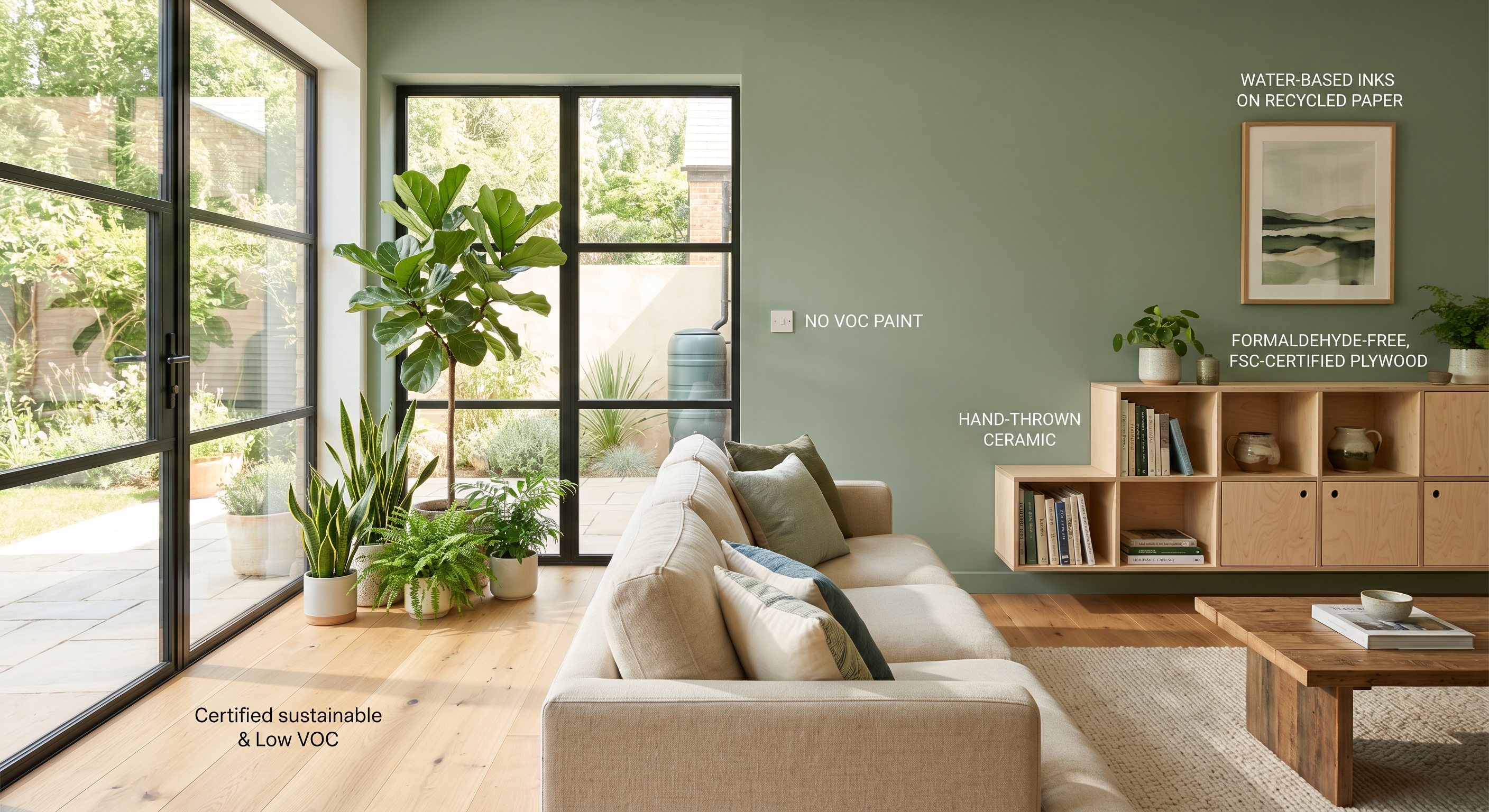
The air inside your home can be two to five times more polluted than outdoor air, according to the U.S. Environmental Protection Agency (EPA). Much of this pollution comes from volatile organic compounds (VOCs) released by everyday building materials. These chemicals appear in paints, adhesives, flooring, and cabinetry, and can contribute to respiratory issues, headaches, and long-term health concerns. For homeowners committed to creating spaces that are both beautiful and safe, selecting low VOC building materials is no longer optional—it's essential.
As designers who specialize in creating healthy, sustainable interiors, we’ve spent years testing and specifying materials that meet the highest standards for indoor air quality. This guide distills our expertise into a practical roadmap for choosing low VOC building materials that align with your aesthetic goals while prioritizing health and longevity. Whether you're renovating a historic home, building new, or refreshing a single room, understanding VOCs—and how to avoid them—will transform how you approach material selection.
At a Glance
- VOCs (volatile organic compounds) are gases emitted from solids or liquids, including many common building materials. They contribute to indoor air pollution and health risks.
- Exposure to high VOC levels can cause short-term symptoms like headaches and dizziness, and long-term exposure is linked to respiratory diseases and cancer.
- Low VOC building materials reduce or eliminate these emissions, creating healthier indoor environments without sacrificing performance or design.
- Key low VOC categories include paints, adhesives, flooring, insulation, cabinetry, and sealants. Look for third-party certifications like Greenguard Gold, Cradle to Cradle, or FloorScore.
- In 2026, the EPA estimates indoor air quality improvements in homes using low VOC materials can reduce asthma-related healthcare costs by up to $1.2 billion annually across the U.S.
Understanding VOCs: What They Are and Why They Matter
Volatile organic compounds are chemicals that evaporate at room temperature, releasing gases into the air we breathe. They are found in thousands of products, from the paint on your walls to the adhesive holding your countertops in place. While not all VOCs are harmful at low levels, many common ones—such as formaldehyde, benzene, and toluene—are linked to serious health risks.
According to the American Cancer Society, long-term exposure to high levels of certain VOCs may increase the risk of cancer and damage to the liver, kidneys, and central nervous system. Short-term exposure can cause eye, nose, and throat irritation, headaches, dizziness, and fatigue—symptoms often dismissed as general discomfort. In homes with poor ventilation, VOC concentrations can build up over time, creating a phenomenon known as "sick building syndrome."
For designers and homeowners, the key is not to eliminate all chemicals—an impossible goal—but to minimize exposure by choosing materials that emit the least amount of VOCs. This starts with understanding where VOCs come from and how they behave in indoor environments.
Where VOCs Lurk in Your Home
VOCs are most commonly found in:
- Paints and coatings: Traditional oil-based and even many water-based paints release VOCs during application and curing. These emissions can continue for weeks or months after painting.
- Adhesives and sealants: Construction adhesives, caulks, and grouts often contain high levels of solvents that off-gas VOCs long after installation.
- Flooring: Vinyl flooring, laminate flooring, and some engineered wood products may emit formaldehyde and other VOCs. Even carpet adhesives can be significant sources.
- Cabinetry and furniture: Medium-density fiberboard (MDF), particleboard, and plywood often use urea-formaldehyde resins as binders, which continue to off-gas formaldehyde for years.
- Insulation: Some spray foam insulation and fiberglass products contain VOCs, particularly those with high solvent content or formaldehyde-based binders.
- Cleaning and maintenance products: Many household cleaners and air fresheners also emit VOCs and can compound the problem in a newly renovated space.
VOC emissions decrease over time as materials cure and off-gas. However, in a tightly sealed, energy-efficient home, these emissions can linger much longer than in older, drafty homes with natural ventilation.
The Science Behind VOC Emissions in Home Construction
When a material is installed, VOC emissions peak during the first few days or weeks—a period known as the "flush-out" phase. During this time, indoor air quality can be significantly worse than outdoor air. According to a 2024 study published in the Journal of Exposure Science & Environmental Epidemiology, homes renovated with conventional materials can have VOC levels up to 10 times higher than pre-renovation levels during the first 30 days.
After the initial flush-out, emissions decline rapidly but can continue at lower levels for months or even years. The rate of decline depends on factors such as temperature, humidity, ventilation, and the specific chemical composition of the material. For example, formaldehyde emissions from pressed wood products typically decrease by half every few months, but they never fully stop.
This is why third-party certification programs have become essential tools for designers and builders. Programs like Greenguard Gold and Cradle to Cradle set strict limits on VOC emissions and require ongoing testing to ensure materials meet health-based standards throughout their lifecycle.
How to Identify Low VOC Building Materials: Certifications and Labels
Not all "low VOC" products are created equal. Some may claim to be low in VOCs but still emit harmful chemicals at levels that exceed safety thresholds. To make informed choices, look for materials that carry third-party certifications from reputable organizations. These certifications are not just marketing tools—they represent rigorous testing and transparency about chemical content.
Here are the most trusted certifications for low VOC building materials:
| Certification | Issued By | Key Standards | Best For |
|---|---|---|---|
| Greenguard Gold | UL Environment | Limits VOCs, formaldehyde, and other harmful chemicals to protect sensitive individuals | Paints, adhesives, flooring, insulation, furniture |
| Cradle to Cradle | Cradle to Cradle Products Innovation Institute | Evaluates material health, recyclability, renewable energy use, water stewardship, and social fairness | Furniture, textiles, paints, flooring, building products |
| FloorScore | SCS Global Services | Tests hard surface flooring and adhesives for VOC emissions | Hardwood, laminate, vinyl, ceramic tile, stone, adhesives |
| GREENGUARD Certified | UL Environment | Meets strict chemical emissions limits for indoor air quality | Furniture, insulation, paints, adhesives |
| Blue Angel | German Federal Ministry for the Environment | One of the world’s oldest eco-labels, focusing on low VOCs and environmental impact | Paints, varnishes, flooring, insulation |
Reading Between the Lines: What the Labels Really Mean
While certifications are the gold standard, not all labels are equally trustworthy. Some manufacturers use vague terms like "eco-friendly," "natural," or "low odor" without defining what they mean. These claims are not regulated and can be misleading. For example, a paint labeled "low odor" may still contain high levels of VOCs—it just smells less pungent.
When evaluating a product, always check:
- The specific certification logo: Look for the certification body’s name or logo on the product or its packaging.
- The certification standard: Each program has different thresholds. For example, Greenguard Gold has stricter limits than Greenguard Certified, especially for formaldehyde and phthalates.
- The product’s test report: Reputable manufacturers make test reports available upon request or online. These reports detail the specific chemicals tested and their emission levels.
- Date of certification: Certifications typically expire after a few years, and products must be retested to maintain their status.
VOC-free products contain no VOCs at all, while low VOC products have reduced but not eliminated VOC content. VOC-free is ideal for chemically sensitive individuals, but it’s not always practical or available for every material.
Common Misconceptions About VOCs and Low VOC Materials
Myth: "Low VOC materials are less durable or perform worse than conventional materials."
Reality: Modern low VOC paints, adhesives, and flooring are engineered to perform just as well—or better—than their conventional counterparts. For example, low VOC paints now offer the same durability, washability, and color retention as traditional paints, with added benefits like mildew resistance and faster drying times. Similarly, low VOC adhesives have improved bonding strength and flexibility, making them suitable for even the most demanding applications.
Myth: "Once a material is installed, VOC emissions stop."
Reality: VOC emissions from building materials can continue for months or years, albeit at much lower levels. This is why third-party certification programs require ongoing testing to ensure materials meet health standards throughout their lifecycle. Even "inert" materials like ceramic tile can release VOCs from grout or adhesives.
Myth: "Natural materials are always low in VOCs."
Reality: Natural doesn’t mean safe. Some natural materials, like certain types of wood or plant-based insulation, can emit terpenes or other organic compounds that may trigger respiratory issues in sensitive individuals. Additionally, natural materials like wool or cork may be treated with synthetic binders or finishes that contain VOCs. Always check for third-party certifications, even on natural products.
Low VOC Paint Finishes: Choosing the Right Products for Your Space
Paint is often the most visible source of VOCs in a home. Traditional oil-based paints can contain up to 380 grams per liter of VOCs, while even some water-based paints can emit significant levels of solvents. Fortunately, the market for low VOC and zero VOC paints has expanded in recent years, offering a wide range of finishes and performance levels to suit any design aesthetic.
Low VOC paints are now available in virtually every finish, from flat matte to high-gloss enamel, and from interior eggshell to exterior satin. They’re also available in a growing palette of colors, including deep, rich hues that were once impossible to achieve with low VOC formulations.
Types of Low VOC Paints and Their Best Uses
Different formulations are designed for different applications. Understanding these distinctions will help you choose the right product for your project.
| Paint Type | VOC Content (grams/liter) | Best For | Certifications to Look For |
|---|---|---|---|
| Zero VOC Paint | <5 g/L | Children’s rooms, nurseries, chemically sensitive individuals | Greenguard Gold, EcoLogo, Green Seal |
| Low VOC Paint | 5–50 g/L | Most interior and exterior applications | Greenguard Certified, California Air Resources Board (CARB) Compliant |
| No VOC Paint | <1 g/L | High-performance interior finishes, commercial spaces | Greenguard Gold, Cradle to Cradle |
| Zero VOC + Low Odor | <5 g/L | Odor-sensitive environments, occupied spaces | Greenguard Gold, EcoLogo |
Top Low VOC Paint Brands for Designers in 2026
As consumer demand for healthier paints has grown, so has the variety of high-quality low VOC options. Here are some of the most trusted brands in the industry, known for their performance, color range, and commitment to transparency:
- Benjamin Moore Natura: A pioneer in the low VOC space, Natura offers zero VOC paint with excellent coverage and durability. It’s available in a full range of sheens and colors, including their popular "Soft" collection of muted, sophisticated hues.
- Sherwin-Williams Harmony: Harmony is a low VOC paint with excellent scrubbability and stain resistance, making it ideal for high-traffic areas like kitchens and hallways. It’s also Greenguard Gold certified.
- Farrow & Ball Modern Emulsion: For a high-end, designer-grade finish, Farrow & Ball’s Modern Emulsion is a water-based, low VOC paint with a rich, velvety texture. It’s ideal for period homes and bespoke interiors.
- ECOS Paints: ECOS specializes in zero VOC paints for chemically sensitive individuals. Their formulas are water-based and free from solvents, phthalates, and formaldehyde. They offer a wide range of finishes and custom colors.
- Milk Paint: A truly natural option, milk paint is made from milk protein, lime, and natural pigments. It’s biodegradable, zero VOC, and creates a beautiful, matte finish. It’s ideal for historic restorations and rustic interiors.
When selecting a low VOC paint, consider not just the color and finish but also the brand’s commitment to transparency and testing. Look for brands that publish their VOC content and third-party certifications online, and don’t hesitate to ask for test reports if you’re working on a sensitive project.
Application Tips for Low VOC Paints
Low VOC paints may require different application techniques than conventional paints, especially in the first few coats. Here are some tips to ensure a flawless finish:
- Surface preparation is key: Low VOC paints often have less solvent content, so they rely more on proper surface prep for adhesion. Sand, clean, and prime surfaces thoroughly before painting.
- Thin coats work best: Apply two or three thin coats rather than one thick coat to achieve even coverage and reduce the risk of drips or uneven drying.
- Allow extra drying time: While low VOC paints dry faster than oil-based paints, they may take longer to cure. Be patient and avoid heavy cleaning or scrubbing for at least two weeks.
- Use the right tools: Low VOC paints work best with high-quality synthetic brushes or rollers designed for water-based paints. Natural bristle brushes can absorb water and distort, leading to uneven application.
- Ventilate during and after painting: Even low VOC paints should be applied in a well-ventilated space. Use fans or open windows to promote air circulation, and avoid painting in humid or cold conditions.
By following these tips, you can achieve a professional-grade finish with low VOC paints that enhances your space’s beauty while protecting its air quality.
Low Formaldehyde Flooring Options: Safe and Stylish Choices
Flooring is one of the most significant sources of formaldehyde in the home, particularly in engineered wood, laminate, and vinyl flooring. Formaldehyde is used as a binder in many composite wood products and as a preservative in some adhesives and finishes. Long-term exposure to formaldehyde has been linked to respiratory issues and an increased risk of cancer, according to the World Health Organization (WHO).
For homeowners seeking safer flooring options, there are now a variety of low formaldehyde and formaldehyde-free choices that don’t compromise on style or durability. From solid hardwood to tile, the options are more expansive—and more beautiful—than ever.
Understanding Formaldehyde in Flooring
Formaldehyde is a colorless, pungent gas commonly used in the production of resins for engineered wood products, adhesives, and finishes. It’s also found in some imported flooring products, particularly those made in countries with less stringent regulations on chemical emissions.
The U.S. Environmental Protection Agency (EPA) classifies formaldehyde as a probable human carcinogen, and the International Agency for Research on Cancer (IARC) lists it as a Group 1 carcinogen. Long-term exposure can cause respiratory symptoms, skin irritation, and an increased risk of certain cancers.
In flooring, formaldehyde emissions are highest in products made with urea-formaldehyde resins, such as laminate flooring and some engineered wood products. Solid hardwood flooring, on the other hand, typically contains little to no added formaldehyde, though it may still off-gas natural VOCs like terpenes.
Best Low Formaldehyde Flooring Options
If you’re renovating your home and want to minimize formaldehyde exposure, here are the best flooring options to consider:
- Solid Hardwood: Solid hardwood flooring is made from a single piece of wood and contains no added formaldehyde. It’s a natural, durable, and beautiful option, though it requires regular maintenance to prevent warping or cupping. Look for FSC-certified wood to ensure sustainable sourcing.
- Bamboo Flooring: Bamboo is a rapidly renewable resource, and high-quality bamboo flooring is made with formaldehyde-free adhesives. It’s durable, stylish, and ideal for both modern and traditional interiors. Look for products certified by the FloorScore or Greenguard Gold programs.
- Cork Flooring: Cork is a natural, renewable material that’s soft underfoot and excellent for sound absorption. It’s made from the bark of the cork oak tree, which is harvested without harming the tree. Cork flooring is naturally low in VOCs and formaldehyde, though it should be sealed with a low VOC finish.
- Tile (Ceramic, Porcelain, or Stone): Tile is an inorganic material and therefore contains no added formaldehyde. It’s a durable, low-maintenance option that’s ideal for kitchens, bathrooms, and high-traffic areas. Look for low VOC grout and adhesives to ensure the entire flooring system is safe.
- Engineered Wood with CARB Phase 2 or ULEF Certification: If you prefer the look of hardwood but need the stability of engineered wood, choose products that meet the California Air Resources Board (CARB) Phase 2 or Ultra-Low Emitting Formaldehyde (ULEF) standards. These products are tested and certified to emit minimal formaldehyde.
- Linoleum: Made from natural materials like linseed oil, cork dust, and wood flour, linoleum is biodegradable and naturally resistant to bacteria and mold. It’s a great option for kitchens and bathrooms, and it’s available in a wide range of colors and patterns. Look for products certified by Greenguard Gold.
Formaldehyde-Free Flooring: What to Look For
When shopping for formaldehyde-free flooring, look for the following certifications and labels to ensure the product meets strict health and safety standards:
- CARB Phase 2: This California standard sets the strictest limits on formaldehyde emissions for composite wood products. Products that meet CARB Phase 2 are considered formaldehyde-free for practical purposes.
- ULEF (Ultra-Low Emitting Formaldehyde): This EPA-endorsed standard certifies that a product emits less than 0.008 ppm of formaldehyde, which is below the detection limit for most testing methods.
- NAF (No Added Formaldehyde): This label indicates that no formaldehyde-based adhesives or binders were used in the product’s manufacture. However, it’s important to note that some NAF products may still contain trace amounts of formaldehyde from natural sources.
- FloorScore: This certification program tests hard surface flooring and adhesives for VOC emissions, including formaldehyde. Look for the FloorScore logo to ensure your flooring and adhesives meet strict indoor air quality standards.
It’s also helpful to ask manufacturers for Material Safety Data Sheets (MSDS) or third-party test reports to verify formaldehyde content and emissions levels. Reputable manufacturers will provide this information without hesitation.
Styling Low Formaldehyde Flooring to Suit Your Aesthetic
Just because you’re choosing healthier flooring doesn’t mean you have to sacrifice style. In fact, many of the most beautiful and on-trend flooring options are also among the safest. Here’s how to style low formaldehyde flooring to complement your interior design:
- Solid Hardwood: Pair light or medium-toned hardwood floors with white or cream walls for a Scandinavian-inspired look. Add warmth with natural wood furniture, wool rugs, and linen textiles.
- Bamboo Flooring: Bamboo’s natural grain and warm tones make it a versatile choice for both modern and organic interiors. Style it with mid-century modern furniture, rattan accents, and earthy color palettes for a cohesive, eco-friendly look.
- Cork Flooring: Cork’s soft, textured surface is perfect for creating a cozy, hygge-inspired space. Pair it with warm wood tones, soft lighting, and plush textiles for an inviting, tactile environment.
- Tile: Tile flooring offers endless design possibilities, from classic subway tile to bold encaustic patterns. Use it to create a statement floor in a kitchen or bathroom, and balance the look with minimalist decor and neutral walls.
- Linoleum: Linoleum’s vibrant colors and patterns make it a fun, playful choice for kitchens and bathrooms. Pair it with retro-inspired furniture and bold artwork for a mid-century modern vibe, or keep it neutral for a Scandinavian or minimalist look.
By choosing low formaldehyde flooring that aligns with your design aesthetic, you can create a healthier home that feels as good as it looks.
Non-Toxic Building Materials for Home Renovation: A Room-by-Room Guide
Renovating your home is an exciting opportunity to create a space that’s healthier, more sustainable, and tailored to your lifestyle. But without careful material selection, it can also introduce a host of new toxins into your environment. To minimize risk and maximize benefits, approach your renovation with a room-by-room strategy, focusing on materials that are both safe and stylish.
Below, we’ve broken down the best non-toxic building materials for each room in your home, from the kitchen to the bedroom, and from the bathroom to the living room. This guide will help you make informed choices that align with your design goals and health priorities.
Kitchen: The Heart of the Home
The kitchen is one of the most complex rooms in the home, with a wide range of materials and finishes that can emit VOCs. From countertops to cabinetry to flooring, every surface presents an opportunity to improve indoor air quality.
Countertops:
- Quartz: Quartz countertops are made from natural quartz crystals and a polymer resin binder. Look for products certified by NSF/ANSI 372 for low VOC content, or choose a manufacturer that uses a 93% or higher quartz content with a low VOC resin.
- Solid Surface: Brands like Corian offer solid surface countertops that are non-porous and low in VOCs. Look for Greenguard Gold certification to ensure minimal emissions.
- Butcher Block: Solid wood butcher block countertops are naturally low in VOCs and add warmth to the kitchen. Choose FSC-certified wood and seal it with a low VOC finish like AFM Safecoat.
- Stainless Steel: Durable, hygienic, and 100% recyclable, stainless steel countertops are a great option for modern kitchens. They contain no VOCs and are easy to clean.
Cabinetry:
- Solid Wood: Solid wood cabinetry is naturally low in VOCs and offers a timeless, high-end look. Choose FSC-certified wood and avoid engineered wood products unless they’re certified as NAF or ULEF.
- Plywood or Hardwood with Low VOC Adhesives: If you prefer the look of natural wood but need the stability of plywood, choose products made with low VOC adhesives and finishes. Look for Greenguard Gold or Cradle to Cradle certification.
- Metal Cabinetry: Metal cabinets, such as those made from aluminum or stainless steel, are completely inert and contain no VOCs. They’re ideal for contemporary kitchens.
Flooring:
- Porcelain or Ceramic Tile: Tile is a durable, low-maintenance option that’s ideal for kitchens. Choose large-format tiles to minimize grout lines, and use low VOC grout and adhesives.
- Linoleum: Linoleum is naturally resistant to bacteria and mold, making it a hygienic choice for kitchens. Look for Greenguard Gold certification.
- Hardwood: Solid hardwood flooring is a classic choice for kitchens, but it requires regular maintenance to prevent water damage. Choose a durable hardwood like oak or maple, and seal it with a low VOC finish.
Backsplash:
- Glass Tile: Glass tile is inert and contains no VOCs. It’s easy to clean and available in a wide range of colors and patterns.
- Natural Stone: Stone like marble, granite, or slate is naturally low in VOCs. Choose a honed or leathered finish for a safer, less slippery surface.
- Recycled Glass: Recycled glass tiles are made from post-consumer glass and are completely inert. They’re a stylish and sustainable option for backsplashes.
Paint and Finishes:
Use low VOC or zero VOC paints and primers on walls and ceilings. For trim and cabinetry, choose low VOC stains and varnishes, such as those from AFM Safecoat or Mineral Paints.
Bathroom: A Sanctuary for Renewal
Bathrooms are prone to mold and mildew, which thrive in damp environments and can exacerbate respiratory issues. Choosing non-toxic, moisture-resistant materials is key to creating a healthy, beautiful bathroom.
Countertops:
- Quartz: Quartz is non-porous and resistant to mold and mildew, making it ideal for bathrooms. Choose a product with Greenguard Gold certification.
- Solid Surface: Solid surface countertops are seamless and easy to clean, reducing the risk of mold growth. Look for Greenguard Gold or NSF/ANSI 372 certification.
- Natural Stone: Stone like marble or granite is naturally resistant to moisture and mold. Choose a honed or leathered finish for safety and slip resistance.
Flooring:
- Porcelain Tile: Porcelain tile is impervious to moisture and easy to clean. Choose large-format tiles to minimize grout lines, and use low VOC grout and adhesives.
- Cork: Cork is naturally resistant to mold and mildew, and it’s soft underfoot. Seal it with a low VOC finish to protect it from moisture.
- Natural Stone: Stone like slate or travertine is naturally resistant to moisture and mold. Choose a textured finish for slip resistance.
Paint and Finishes:
- Milk Paint: Milk paint is a natural, zero VOC option that’s ideal for bathrooms. It’s breathable and resistant to mold and mildew.
- Low VOC Bathroom Paint: Look for paint specifically formulated for high-moisture environments, such as AFM Safecoat or ECOS Paints.
Caulk and Sealants:
Use 100% silicone caulk or low VOC, mold-resistant caulk for sealing joints and seams. Avoid acrylic caulk, which can harbor mold and mildew.
Bedroom: A Restorative Retreat
The bedroom should be a sanctuary for rest and rejuvenation. To create a space that promotes deep, restorative sleep, choose materials that minimize VOC exposure and maximize comfort.
Flooring:
- Solid Hardwood: Solid hardwood flooring is naturally low in VOCs and adds warmth to the bedroom. Choose a durable hardwood like oak or maple, and seal it with a low VOC finish.
- Cork: Cork is soft underfoot and excellent for sound absorption, making it ideal for bedrooms. Seal it with a low VOC finish.
- Bamboo: Bamboo flooring is durable, stylish, and low in VOCs. Choose a product certified by FloorScore or Greenguard Gold.
Paint and Finishes:
- Zero VOC Paint: Use zero VOC paint on walls and ceilings for a healthier sleep environment. Look for brands like Benjamin Moore Natura or Farrow & Ball Modern Emulsion.
- Low VOC Wood Stain: If you’re staining wood furniture or flooring, choose a low VOC wood stain like those from AFM Safecoat.
Furniture:
- Solid Wood: Choose solid wood furniture made from FSC-certified wood. Avoid furniture made from particleboard or MDF unless it’s certified as NAF or ULEF.
- Metal or Glass: Metal and glass furniture are completely inert and contain no VOCs. They’re ideal for modern or minimalist bedrooms.
Bedding and Textiles:
Choose bedding made from natural, organic materials like organic cotton, linen, or wool. Look for certifications like GOTS (Global Organic Textile Standard) or Oeko-Tex to ensure the materials are free from harmful chemicals.
Living Room: A Space for Connection
The living room is where you gather with family and friends, so it should be a space that’s both beautiful and healthy. Choose materials that are durable, low in VOCs, and easy to maintain.
Flooring:
- Engineered Wood: If you prefer the look of hardwood but need the stability of engineered wood, choose a product certified by CARB Phase 2 or ULEF.
- Tile: Tile is a durable, low-maintenance option that’s ideal for living rooms. Choose large-format tiles to minimize grout lines, and use low VOC grout and adhesives.
- Natural Fiber Rugs: Choose rugs made from natural fibers like wool, jute, or sisal. Look for rugs certified by GOTS or Oeko-Tex to ensure they’re free from harmful chemicals.
Paint and Finishes:
- Low VOC Paint: Use low VOC paint on walls and ceilings for a healthier living space. Look for brands like Sherwin-Williams Harmony or ECOS Paints.
- Low VOC Wood Stain: If you’re staining wood furniture or flooring, choose a low VOC wood stain like those from AFM Safecoat.
Furniture:
- Solid Wood: Choose solid wood furniture made from FSC-certified wood. Avoid furniture made from particleboard or MDF unless it’s certified as NAF or ULEF.
- Metal or Glass: Metal and glass furniture are completely inert and contain no VOCs. They’re ideal for modern or minimalist living rooms.
Home Office: A Productive Sanctuary
With more people working from home than ever, the home office has become a critical space for productivity and well-being. Choose materials that minimize distractions and promote focus, such as low VOC paints, natural flooring, and ergonomic furniture.
Flooring:
- Cork: Cork is soft underfoot and excellent for sound absorption, making it ideal for home offices. Seal it with a low VOC finish.
- Bamboo: Bamboo flooring is durable, stylish, and low in VOCs. Choose a product certified by FloorScore or Greenguard Gold.
- Hardwood: Solid hardwood flooring is naturally low in VOCs and adds warmth to the home office. Choose a durable hardwood like oak or maple, and seal it with a low VOC finish.
Paint and Finishes:
- Zero VOC Paint: Use zero VOC paint on walls and ceilings for a healthier work environment. Look for brands like Benjamin Moore Natura or Farrow & Ball Modern Emulsion.
- Low VOC Wood Stain: If you’re staining wood furniture or flooring, choose a low VOC wood stain like those from AFM Safecoat.
Furniture:
- Solid Wood: Choose solid wood furniture made from FSC-certified wood. Avoid furniture made from particleboard or MDF unless it’s certified as NAF or ULEF.
- Metal or Glass: Metal and glass furniture are completely inert and contain no VOCs. They’re ideal for modern or minimalist home offices.
Eco-Friendly Interior Materials: Balancing Beauty and Health
Eco-friendly interior materials are those produced using sustainable practices, have a low environmental impact, and contribute to a healthier indoor environment. These materials are often made from renewable resources, recycled content, or biodegradable components, and they’re designed to minimize waste and energy consumption during production and use.
For homeowners who value both aesthetics and sustainability, eco-friendly interior materials offer the best of both worlds. They allow you to create a beautiful, healthy home that aligns with your values and reduces your environmental footprint.
Top Eco-Friendly Interior Materials for 2026
Here are some of the most innovative and stylish eco-friendly interior materials available in 2026, along with their benefits and best uses:
- Reclaimed Wood: Reclaimed wood is salvaged from old buildings, factories, or barns and repurposed into flooring, furniture, or wall paneling. It’s a sustainable option that adds character and history to your space. Look for FSC-certified reclaimed wood to ensure responsible sourcing.
- Recycled Glass: Recycled glass can be used for countertops, tiles, and decorative accents. It’s made from post-consumer glass and is completely inert, making it a safe and sustainable choice for kitchens and bathrooms.
- Bamboo: Bamboo is a rapidly renewable resource that’s durable, stylish, and low in VOCs. It’s ideal for flooring, cabinetry, and furniture, and it’s available in a wide range of colors and finishes.
- Cork: Cork is harvested from the bark of the cork oak tree, which is not harmed during the process. It’s a renewable, biodegradable material that’s soft underfoot and excellent for sound absorption. Cork is ideal for flooring, wall coverings, and furniture.
- Hemp: Hemp is a versatile, renewable resource that can be used for flooring, wall coverings, and textiles. It’s naturally resistant to mold and mildew, making it ideal for bathrooms and kitchens. Hemp flooring is durable, soft underfoot, and naturally low in VOCs.
- Mycelium: Mycelium is the root structure of mushrooms and is being used to create sustainable materials like insulation, flooring, and packaging. It’s biodegradable, lightweight, and naturally fire-resistant. Mycelium-based materials are still emerging in the market, but they offer exciting possibilities for the future of eco-friendly interiors.
- Recycled Metal: Recycled metal can be used for countertops, backsplashes, and decorative accents. It’s durable, recyclable, and completely inert, making it a safe and sustainable choice for modern interiors.
How to Choose Eco-Friendly Materials That Align With Your Aesthetic
Eco-friendly materials come in a wide range of colors, textures, and finishes, so you can find options that suit any design style. Here’s how to choose eco-friendly materials that align with your aesthetic:
- For a minimalist look: Choose materials with clean lines and neutral colors, such as reclaimed wood, recycled glass, or bamboo flooring. Pair them with low VOC paints and natural textiles for a cohesive, understated aesthetic.
- For a rustic look: Reclaimed wood, cork, and hemp are perfect for creating a cozy, rustic space. Add warmth with wool rugs, linen textiles, and natural wood furniture.
- For a modern look: Recycled metal, recycled glass, and mycelium-based materials offer sleek, contemporary finishes. Pair them with minimalist furniture and neutral walls for a sophisticated, eco-conscious space.
- For a bohemian look: Hemp, cork, and bamboo are ideal for creating a boho-chic space. Layer in vibrant textiles, rattan accents, and plenty of plants for a lively, inviting environment.
Sourcing Eco-Friendly Materials: Where to Buy
Finding high-quality, eco-friendly materials can be a challenge, but there are now many reputable retailers and manufacturers that specialize in sustainable building products. Here are some of the best places to source eco-friendly materials in 2026:
- Specialty Eco-Friendly Retailers: Websites like BuildingGreen, EcoBuilding Pulse, and Treehugger curate lists of eco-friendly products and materials, complete with reviews and ratings.
- Sustainable Design Firms: Many design firms specialize in sustainable interiors and can recommend eco-friendly materials that align with your aesthetic. Look for firms with certifications like LEED or WELL.
- Local Salvage Yards: Salvage yards are a treasure trove of reclaimed wood, fixtures, and architectural elements. Shopping locally reduces your environmental footprint and supports your community.
- Online Marketplaces: Websites like Etsy, eBay, and Craigslist offer a wide range of secondhand and upcycled materials, from furniture to lighting to decorative accents.
- Manufacturer Websites: Many manufacturers of eco-friendly materials sell directly to consumers through their websites. Look for brands like Teragren (bamboo flooring), IceStone (recycled glass countertops), and Forbo (linoleum flooring).
By sourcing eco-friendly materials from reputable retailers and manufacturers, you can create a healthier, more sustainable home that reflects your values and design aesthetic.
Designing for Health: How to Create a Low VOC Home From the Ground Up
Creating a low VOC home isn’t just about choosing the right materials—it’s about approaching your design with health and wellness as a priority. From the layout of your space to the finishes you select, every decision can impact indoor air quality and your overall well-being. Here’s a step-by-step guide to designing a low VOC home from the ground up.
Step 1: Plan Your Space for Optimal Airflow
Good ventilation is the cornerstone of a healthy home. Without it, VOCs and other pollutants can build up, creating a stuffy, unhealthy environment. When planning your space, consider these strategies to promote airflow:
- Open floor plans: Open floor plans allow air to circulate more freely, reducing the buildup of pollutants. If you’re working with a closed floor plan, consider adding transom windows or louvered doors to promote airflow between rooms.
- Cross-ventilation: Position windows and doors to create cross-ventilation, which allows fresh air to flow through your home. This is especially important in bedrooms and living rooms, where you spend the most time.
- Mechanical ventilation: Consider installing a heat recovery ventilator (HRV) or energy recovery ventilator (ERV) to bring in fresh air and exhaust stale air without losing energy efficiency. These systems are particularly beneficial in tightly sealed, energy-efficient homes.
- Ceiling fans: Ceiling fans help circulate air and reduce the buildup of pollutants. Choose fans with low VOC finishes and energy-efficient motors.
- Air purifiers: Air purifiers with HEPA filters and activated carbon can help remove VOCs and other pollutants from the air. Look for purifiers certified by the Association of Home Appliance Manufacturers (AHAM).
Step 2: Choose Low VOC Materials for Every Surface
Every surface in your home has the potential to emit VOCs, so it’s important to choose low VOC materials for floors, walls, ceilings, cabinetry, countertops, and furniture. Here’s a quick guide to the best low VOC materials for each surface:
- Flooring: Solid hardwood, bamboo, cork, tile, or linoleum.
- Walls: Low VOC or zero VOC paint, natural plaster, or clay plaster.
- Ceilings: Low VOC paint, natural plaster, or wood paneling.
- Cabinetry: Solid wood, plywood with low VOC adhesives, or metal.
- Countertops: Quartz, solid surface, butcher block with low VOC finish, or stainless steel.
- Furniture: Solid wood, metal, or glass. Avoid particleboard or MDF unless certified as NAF or ULEF.
- Insulation: Cellulose, wool, or fiberglass with formaldehyde-free binders.
- Adhesives and sealants: Low VOC adhesives, caulks, and grouts.
Step 3: Prioritize Natural and Biophilic Design
Biophilic design incorporates natural elements into your space to promote health and well-being. Studies have shown that biophilic design can reduce stress, improve cognitive function, and enhance mood. Here are some ways to incorporate biophilic design into your low VOC home:
- Plants: Houseplants are natural air purifiers and can help remove VOCs from the air. Choose low-maintenance plants like snake plants, pothos, or spider plants, which are known for their air-purifying qualities.
- Natural light: Maximize natural light in your home to boost your mood and reduce the need for artificial lighting, which can emit blue light and disrupt your sleep cycle.
- Natural materials: Incorporate natural materials like wood, stone, cork, and wool into your space to create a connection to the outdoors and reduce the use of synthetic, VOC-emitting materials.
- Views of nature: Position windows and seating areas to maximize views of nature, whether it’s a garden, park, or tree-lined street.
- Water features: Water features like fountains or indoor ponds can add a calming, spa-like ambiance to your home while promoting humidity and air purification.
Step 4: Minimize Synthetic Textiles and Furnishings
Synthetic textiles and furnishings, such as polyester, nylon, and polyurethane foam, can emit VOCs and other harmful chemicals. To create a healthier home, minimize the use of synthetic materials and opt for natural, organic alternatives instead.
Here are some tips for choosing healthier textiles and furnishings:
- Furniture: Choose furniture made from solid wood, metal, or glass. Avoid upholstered furniture made from synthetic fabrics or foam unless they’re certified as low VOC or organic.
- Bedding: Choose bedding made from organic cotton, linen, wool, or bamboo. Look for certifications like GOTS or Oeko-Tex to ensure the materials are free from harmful chemicals.
- Rugs: Choose rugs made from natural fibers like wool, jute, sisal, or hemp. Look for rugs certified by GOTS or Oeko-Tex.
- Curtains and drapes: Choose curtains and drapes made from natural fibers like linen, cotton, or silk. Avoid synthetic fabrics like polyester or nylon, which can emit VOCs.
- Upholstery: If you need upholstered furniture, choose pieces with removable, washable covers made from organic cotton or linen. Avoid synthetic fabrics or foam.
Step 5: Test Your Indoor Air Quality
Even with careful material selection, it’s important to test your indoor air quality to ensure your home is truly healthy. Air quality tests can detect VOCs, formaldehyde, radon, and other pollutants, giving you peace of mind and a baseline for future improvements.
Here are some ways to test your indoor air quality:
- DIY test kits: DIY test kits are available for detecting VOCs, formaldehyde, radon, and other pollutants. These kits are affordable and easy to use, though they may not be as accurate as professional tests.
- Professional testing: For a more comprehensive analysis, hire a professional to test your indoor air quality. A professional can test for a wide range of pollutants and provide recommendations for improving your air quality.
- Smart monitors: Smart air quality monitors like the Awair or Foobot provide real-time data on VOCs, formaldehyde, humidity, and temperature. These monitors can help you track your air quality over time and identify sources of pollution.
If your air quality tests reveal high levels of VOCs or other pollutants, don’t panic. There are many steps you can take to improve your air quality, from increasing ventilation to adding air purifiers to removing or replacing sources of pollution.
Step 6: Maintain Your Home for Long-Term Health
Creating a low VOC home is only the first step—maintaining it is just as important. Over time, dust, dirt, and pollutants can build up, reducing your indoor air quality and impacting your health. Here are some tips for maintaining your low VOC home:
- Clean regularly: Dust and vacuum your home regularly using a vacuum with a HEPA filter to remove dust, dirt, and allergens. Avoid using synthetic air fresheners or cleaning products that emit VOCs.
- Change air filters: Change the air filters in your HVAC system regularly to ensure it’s circulating clean, healthy air. Choose high-efficiency filters like MERV 13 or HEPA filters.
- Monitor humidity: Keep humidity levels between 30% and 50% to prevent mold growth and dust mites. Use a hygrometer to monitor humidity levels, and consider using a dehumidifier or humidifier as needed.
- Ventilate: Open windows and doors regularly to bring in fresh air and exhaust stale air. If your home is tightly sealed, consider installing a heat recovery ventilator (HRV) or energy recovery ventilator (ERV).
- Avoid synthetic fragrances: Synthetic fragrances in air fresheners, candles, and cleaning products can emit VOCs and other harmful chemicals. Choose natural alternatives like essential oils or beeswax candles instead.
- Store chemicals safely: Store cleaning products, paints, and other chemicals in a well-ventilated area or outside your home. Avoid storing them in enclosed spaces like closets or cabinets.
By following these steps, you can maintain a healthy, low VOC home that supports your well-being and enhances your quality of life.
FAQs About Low VOC Building Materials
What are VOCs, and why should I care about them in my home?
VOCs, or volatile organic compounds, are gases emitted from solids or liquids, including many common building materials. They contribute to indoor air pollution and can cause short-term symptoms like headaches and dizziness, as well as long-term health risks like respiratory diseases and cancer. According to the U.S. Environmental Protection Agency (EPA), indoor air can be two to five times more polluted than outdoor air, largely due to VOC emissions.
How can I tell if a product is truly low VOC?
The best way to ensure a product is low VOC is to look for third-party certifications from reputable organizations like Greenguard Gold, Cradle to Cradle, or FloorScore. These certifications require rigorous testing and ongoing verification to ensure products meet strict health-based standards. Always check the product’s test report or certification logo to verify its claims.
Are low VOC materials more expensive than conventional materials?
While low VOC materials can be more expensive upfront, they offer long-term value by improving indoor air quality and reducing health risks. Additionally, the market for low VOC materials has grown significantly in recent years, making them more accessible and affordable than ever. For example, low VOC paints now cost only slightly more than conventional paints, and the price difference is often offset by their superior performance and durability.
Can I use low VOC materials in a historic home renovation?
Yes. Many low VOC materials are designed to mimic the look and feel of historic materials, making them ideal for renovations. For example, milk paint offers a vintage, matte finish that’s perfect for historic homes, while reclaimed wood flooring adds character and history. Always choose materials that are compatible with the architectural style of your home, and consult a historic preservation specialist if needed.
Do low VOC materials perform as well as conventional materials?
Absolutely. Modern low VOC materials are engineered to perform just as well—or better—than their conventional counterparts. For example, low VOC paints now offer the same durability, washability, and color retention as traditional paints, with added benefits like mildew resistance and faster drying times. Similarly, low VOC adhesives have improved bonding strength and flexibility, making them suitable for even the most demanding applications.
How long do VOC emissions last after installation?
VOC emissions from building materials peak during the first few days or weeks after installation—a period known as the "flush-out" phase. During this time, indoor air quality can be significantly worse than pre-renovation levels. After the initial flush-out, emissions decline rapidly but can continue at lower levels for months or even years. The rate of decline depends on factors like temperature, humidity, ventilation, and the specific chemical composition of the material.
Are natural materials always low in VOCs?
Not necessarily. While natural materials like wood, cork, or wool are generally low in VOCs, they can still emit natural organic compounds that may trigger respiratory issues in sensitive individuals. Additionally, some natural materials are treated with synthetic binders or finishes that contain VOCs. Always check for third-party certifications, even on natural products, to ensure they meet health-based standards.
What’s the difference between "low VOC" and "zero VOC"?
"Zero VOC" products contain no VOCs at all, while "low VOC" products have reduced but not eliminated VOC content. VOC-free is ideal for chemically sensitive individuals, but it’s not always practical or available for every material. Low VOC products are a great option for most homeowners, as they offer a balance between performance, affordability, and health.
Can I install low VOC materials myself, or do I need a professional?
Many low VOC materials can be installed by homeowners with basic DIY skills, but some materials—like tile or hardwood flooring—require professional installation for the best results. Always follow the manufacturer’s instructions for installation, and consult a professional if you’re unsure about a specific material or technique. For example, low VOC paints may require different application techniques than conventional paints, so it’s important to do your research before starting a project.
How do I test my indoor air quality for VOCs?
You can test your indoor air quality for VOCs using DIY test kits, professional testing services, or smart air quality monitors. DIY test kits are affordable and easy to use, though they may not be as accurate as professional tests. Smart monitors like the Awair or Foobot provide real-time data on VOCs, formaldehyde, humidity, and temperature, helping you track your air quality over time.
What’s the best way to ventilate my home to reduce VOC buildup?
The best way to ventilate your home is to create cross-ventilation by positioning windows and doors to allow fresh air to flow through. Consider installing a heat recovery ventilator (HRV) or energy recovery ventilator (ERV) to bring in fresh air and exhaust stale air without losing energy efficiency. Ceiling fans and air purifiers with HEPA filters and activated carbon can also help circulate air and remove VOCs.
Where can I buy low VOC building materials?
Low VOC building materials are available from specialty eco-friendly retailers, sustainable design firms, local salvage yards, online marketplaces, and manufacturer websites. Look for brands with third-party certifications, and don’t hesitate to ask for test reports or product specifications. Some reputable retailers include BuildingGreen, EcoBuilding Pulse, and Treehugger.
If you’re working with an interior designer or architect, they can also recommend trusted sources for low VOC materials that align with your aesthetic and budget.
Final Thoughts: Building a Home That’s as Healthy as It Is Beautiful
Creating a low VOC home is about more than just choosing healthier materials—it’s about rethinking the way you design, build, and live in your space. It’s a commitment to prioritizing wellness, sustainability, and beauty in equal measure, and it’s a choice that will benefit you and your family for years to come.
As designers, we’ve seen how low VOC materials can transform a home. Clients often tell us that their new spaces feel lighter, brighter, and more inviting—qualities that go beyond aesthetics to impact their daily lives. Whether it’s the crisp, clean air of a freshly painted room or the warm, natural feel of reclaimed wood flooring, healthier materials create a deeper connection to your home and to the environment.
But perhaps the most rewarding aspect of designing a low VOC home is the peace of mind it brings. Knowing that your space is free from harmful chemicals allows you to focus on what truly matters: creating memories, hosting gatherings, and enjoying the comfort of your sanctuary. In a world where we’re bombarded with toxins and stressors, your home should be a place of refuge—a space that nurtures your body, mind, and spirit.
If you’re ready to take the first step toward a healthier, more beautiful home, start by educating yourself about VOCs and the materials that emit them. Choose certifications like Greenguard Gold, Cradle to Cradle, and FloorScore as your guide, and don’t be afraid to ask questions or demand transparency from manufacturers. With the right knowledge and resources, you can create a space that’s as good for your health as it is for your soul.
Remember, every choice matters—from the paint on your walls to the flooring under your feet. By prioritizing low VOC building materials, you’re not just designing a home. You’re designing a healthier future.