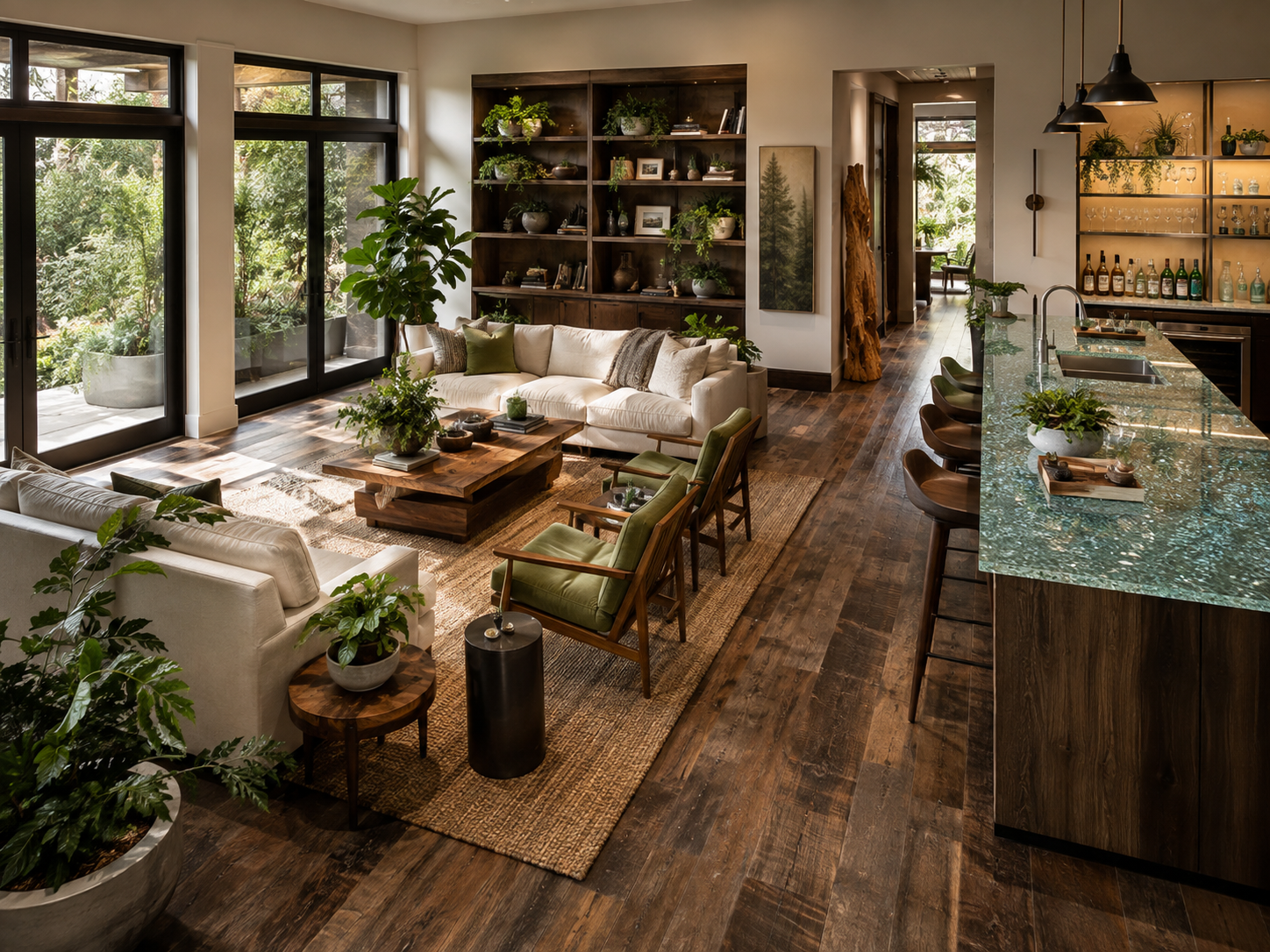
<p>Choosing <strong>sustainable interior design materials</strong> doesn’t mean giving up luxury—it means creating spaces that combine style with responsibility. High-end homeowners increasingly prefer materials that limit environmental harm, avoid toxic chemicals, and last for decades while maintaining the quality expected in premium interiors. Options like reclaimed hardwoods with visible history or recycled glass countertops that rival marble show how eco-conscious luxury has matured. According to the <a href="https://www.epa.gov/" rel="nofollow">U.S. Environmental Protection Agency</a>, indoor air can contain up to five times more pollutants than outdoor air, mainly from volatile organic compounds (VOCs) in standard building materials—a fact that explains why healthier alternatives matter. This guide covers the most effective materials for sustainable luxury interiors, where to find them, how to confirm their credentials, and why they make sense as investments.</p>

<section id="at-a-glance">
<h2>At a Glance</h2>
<ul>
<li>High-end materials like reclaimed teak, recycled glass, and FSC-certified hardwoods deliver both looks and eco-responsibility.</li>
<li>Non-toxic and low-VOC materials improve indoor air quality, important in luxury homes where ventilation is often controlled.</li>
<li>Long-lasting materials reduce waste and replacement costs over time.</li>
<li>Look for FSC, Cradle to Cradle, Greenguard, and OEKO-TEX certifications to verify claims.</li>
<li>Regionally sourced stone, wood, and textiles cut carbon footprints and support local craftspeople.</li>
</ul>
</section>

<h2>Why Sustainable Materials Matter in Luxury Design</h2>

<p>Luxury today means mindful opulence. Homeowners who value both appearance and ethics increasingly choose <strong>eco-friendly home decor materials</strong> to create interiors that are both responsible and beautiful. Demand for such materials has grown, with the global sustainable interior design market expected to reach $125.3 billion by 2027, expanding at 6.8% annually from 2022 to 2027 according to <a href="https://www.marketresearchfuture.com/" rel="nofollow">Market Research Future</a>. This change reflects a broader move toward mindful consumption, where a material’s origins, production, and lifecycle add as much value as its appearance.</p>

<p>Reclaimed wood illustrates this well: each plank carries visible history, from centuries-old barn beams to vintage flooring. These materials don’t just reduce logging—they bring unique character to a space. Recycled glass countertops, made from post-consumer bottles, refract light like high-end quartz while keeping waste out of landfills. Luxury textiles are also changing, with organic cotton, hemp, and linen offering durability and breathability without the environmental cost of conventional fabrics.</p>

<p>For discerning homeowners, sustainability isn’t a compromise—it’s a strategic upgrade. Materials certified by <a href="https://www.cradletocradle.com/" rel="nofollow">Cradle to Cradle</a> are designed for circular use, meant to be perpetually reused or recycled. This matches the goals of <a href="https://thehandsonhome.com/journal/sustainable-interior-design-creating-a-stylish-home-that-lasts/">sustainable interior design</a>, where every choice—from paint to furniture—supports a healthier planet and a more meaningful home. The outcome is a space that feels both timeless and current, where every detail reflects craftsmanship and conservation.</p>

<h3>Health and Comfort: The Hidden Luxury</h3>

<p>Indoor air quality is a subtle luxury. Common materials like pressed wood, synthetic carpets, and oil-based paints often release VOCs that can worsen allergies, asthma, and other breathing problems. In contrast, <strong>non-toxic interior design materials</strong> such as clay plasters, natural linoleum, and water-based finishes prioritize health without sacrificing style. The <a href="https://www.who.int/" rel="nofollow">World Health Organization</a> reports that poor indoor air quality contributes to 3.8% of global deaths, a risk luxury homeowners should consider since they spend considerable time indoors. Choosing Greenguard Gold-certified products ensures materials meet strict emissions standards, creating spaces that are as safe as they are attractive.</p>

<p>Luxury textiles also play a role. Organic wool is naturally flame-resistant and moisture-wicking, making it ideal for high-end upholstery without synthetic treatments. Tencel™ lyocell, from sustainably managed wood pulp, offers a silky feel gentler on skin and the planet than regular rayon. These choices aren’t just ethical—they show a homeowner’s commitment to personal and planetary well-being.</p>

<h2>Top Sustainable Flooring Options for Homes</h2>

<p>Flooring sets the tone for any interior. The best <strong>sustainable flooring options for homes</strong> balance durability, style, and eco-friendliness to last for generations. Below are the top choices for luxury interiors, evaluated for sustainability, appearance, and practical use.</p>

<table>
<thead>
<tr>
<th>Material</th>
<th>Sustainability Highlights</th>
<th>Style Appeal</th>
<th>Durability</th>
<th>Cost Range (USD/sq. ft.)</th>
</tr>
</thead>
<tbody>
<tr>
<td><strong>Reclaimed Hardwood</strong></td>
<td>Salvaged from old barns, factories, or warehouses; reduces logging and landfill waste.</td>
<td>Rich patina, unique grain patterns, and historical character. Available in wide planks, herringbone, and chevron patterns.</td>
<td>50–100+ years with proper care.</td>
<td>$8–$25</td>
</tr>
<tr>
<td><strong>Bamboo (Strand-Woven)</strong></td>
<td>Fast-growing grass (not wood); FSC-certified options available. Uses formaldehyde-free adhesives.</td>
<td>Clean, modern look with subtle linear grain. Can be stained or carbonized for warmth.</td>
<td>30–50 years.</td>
<td>$5–$15</td>
</tr>
<tr>
<td><strong>Cork</strong></td>
<td>Harvested from cork oak bark without harming the tree; 100% biodegradable and renewable.</td>
<td>Soft, warm underfoot with textured, organic appearance. Works well in kitchens and living areas.</td>
<td>25–40 years.</td>
<td>$6–$18</td>
</tr>
<tr>
<td><strong>Recycled Glass Tile</strong></td>
<td>Made from post-consumer glass; infinitely recyclable. Manufacturing uses less energy than virgin materials.</td>
<td>Vibrant colors, metallic flecks, and reflective surfaces. Great for backsplashes and statement floors.</td>
<td>20–30 years (or longer with proper sealing).</td>
<td>$10–$30</td>
</tr>
<tr>
<td><strong>Natural Linoleum</strong></td>
<td>Made from linseed oil, pine resin, and cork dust; biodegradable and naturally antibacterial.</td>
<td>Available in matte and glossy finishes, with many colors and patterns.</td>
<td>25–40 years.</td>
<td>$7–$20</td>
</tr>
<tr>
<td><strong>Stone (Local & Ethically Sourced)</strong></td>
<td>Quarried responsibly with minimal environmental disruption. Look for suppliers using water recycling and reclamation.</td>
<td>Timeless elegance with unique veining and textures. Works in modern and traditional settings.</td>
<td>50–100+ years.</td>
<td>$15–$50+</td>
</tr>
</tbody>
</table>

<h3>How to Choose the Right Flooring for Your Space</h3>

<p>Picking <strong>sustainable flooring options for homes</strong> begins with your lifestyle and design goals. High-traffic areas like entryways and kitchens need durable materials. Reclaimed hardwood and strand-woven bamboo resist scratches and can be refinished. For bedrooms and living rooms, cork and natural linoleum provide warmth underfoot, while recycled glass tiles make striking accents in bathrooms or powder rooms.</p>

<p>Indoor air quality matters too. Materials like natural linoleum and cork resist microbes, making them good for homes with allergies or pets. For those concerned about VOCs, Greenguard Gold certification limits formaldehyde and other harmful chemicals. The <a href="https://www.greenguard.org/" rel="nofollow">UL Greenguard Certification</a> program is a trusted benchmark for low-emission products, ensuring your flooring supports a healthier indoor environment.</p>

<p>Also consider the material’s lifecycle. Natural linoleum can be recycled at end of life, while some engineered wood products are harder to repurpose. Cradle to Cradle certification ensures materials are designed for reuse or recycling, aligning with circular economy principles. This approach cuts waste and protects your investment against changing sustainability rules.</p>

<h2>Non-Toxic Interior Design Materials: Safety Meets Sophistication</h2>

<p>For luxury homeowners, occupant health is as important as aesthetics. <strong>Non-toxic interior design materials</strong> prevent VOC off-gassing, keeping your space clean and comfortable. The <a href="https://www.epa.gov/iaq/" rel="nofollow">U.S. EPA</a> reports indoor air can be 2–5 times—and sometimes 100 times—more polluted than outdoor air, largely due to common materials like particleboard, MDF, and synthetic carpets that release formaldehyde and other VOCs over time. Switching to non-toxic options protects health and extends material life, since VOCs can degrade paint, adhesives, and finishes prematurely.</p>

<h3>Wall Finishes: Paint, Plaster, and Wallpaper</h3>

<p>Paint is one of the easiest swaps. Conventional paints often contain VOCs like benzene and formaldehyde that can linger for years. In contrast, <a href="https://www.greenguard.org/" rel="nofollow">Greenguard Gold-certified paints</a> and natural clay paints emit nothing while delivering rich colors. Brands like <a href="https://www.afm Safecoat.com/" rel="nofollow">AFM Safecoat</a> and <a href="https://www.ecopaint.com/" rel="nofollow">EcoPaints</a> specialize in low-VOC and zero-VOC options that match conventional paints in finish and durability. For a textured, artisanal look, clay plaster is a standout. Made from natural clay, sand, and pigments, it regulates humidity, absorbs odors, and provides a soft, matte finish that’s elegant and functional. Unlike gypsum plaster, clay plaster is fully biodegradable and needs no synthetic additives.</p>

<p>Wallpaper has also gone green. Look for options made from recycled paper, natural fibers like hemp or linen, or even recycled textiles for unique style. Brands like <a href="https://www.sanderswallpaper.com/" rel="nofollow">Sanders Wallpaper</a> and <a href="https://www.farrow-ball.com/" rel="nofollow">Farrow & Ball</a> sell collections printed with water-based inks and eco-friendly adhesives. For a bold wall, consider peel-and-stick wallpaper made from recycled vinyl or cork—both are durable, easy to install, and free of harmful chemicals.</p>

<h3>Adhesives and Sealants: The Unsung Heroes</h3>

<p>Even the greenest materials can turn toxic if installed with conventional adhesives. <strong>Non-toxic adhesives</strong> avoid solvents, formaldehyde, and phthalates, keeping floors, countertops, and cabinetry pristine. For example, <a href="https://www.mapei.com/" rel="nofollow">Mapei’s</a> Ultralite S1 Zero VOC Adhesive is Greenguard Gold-certified and works for tile, wood, and resilient flooring. <a href="https://www.bostik.com/" rel="nofollow">Bostik’s</a> Greenforce line offers low-VOC sealants for countertops, reducing off-gassing in kitchens and bathrooms. When selecting adhesives, prioritize products with third-party certifications like Greenguard Gold or California’s <a href="https://www.cdph.ca.gov/" rel="nofollow">Department of Public Health’s Section 01350</a> standards, which set strict emissions rules.</p>

<p>The lesson is clear: non-toxic materials aren’t a trend—they’re essential for luxury homes that value both beauty and health. By choosing paints, plasters, and adhesives that meet strict emissions standards, you’re not just decorating a room—you’re building a healthier, more resilient home.</p>

<h2>Recycled and Reclaimed Design Elements: Beauty with a Backstory</h2>

<p>Materials with a past add unique charm. <strong>Recycled and reclaimed design elements</strong> bring history, character, and sustainability to luxury interiors. From salvaged steel beams turned into light fixtures to vintage glass tiles from demolished buildings, these materials add depth and authenticity. The <a href="https://www.epa.gov/" rel="nofollow">U.S. EPA</a> notes recycling one ton of glass saves 1.1 tons of natural resources, including 1,330 pounds of sand and 433 pounds of soda ash—a strong case for using recycled glass in design.</p>

<h3>Furniture and Fixtures with a Past</h3>

<p>Reclaimed wood furniture anchors <strong>eco-chic interiors</strong>. Whether it’s a dining table from 19th-century French oak or a coffee table made from repurposed wine barrels, these pieces tell a story while reducing logging. Brands like <a href="https://www.reclaimedfurniture.com/" rel="nofollow">Reclaimed Furniture</a> and <a href="https://www.humanesign.com/" rel="nofollow">Humane Sign</a> specialize in one-of-a-kind pieces blending vintage charm with modern craftsmanship. For industrial style, consider lighting from salvaged metal or countertops made from compressed recycled paper and resin, like those from <a href="https://www.ice-stone.com/" rel="nofollow">IceStone</a>.</p>

<p>Reclaimed metal, especially copper and brass, develops a rich patina over time. These metals are 100% recyclable and often sourced from old industrial buildings, plumbing, or wiring. A reclaimed copper sink or brass cabinet pulls add warmth and history, while their durability ensures decades of use. Even textiles are getting the reclaimed treatment: brands like <a href="https://www.ecotextile.com/" rel="nofollow">EcoTextile</a> use recycled cotton, wool, and even fishing nets to create luxurious rugs and upholstery that cut waste without sacrificing texture or color.</p>

<h3>Architectural Salvage: Doors, Windows, and Beyond</h3>

<p>Architectural salvage offers hidden treasures for luxury homeowners. Salvaged doors can serve as statement pieces in a foyer or room dividers, their original hardware and patina adding instant history. Windows from historic buildings can be retrofitted with modern glazing to improve energy efficiency while keeping vintage charm. Even hardware—knobs, hinges, and pulls—can be sourced from salvage yards, offering antique allure and unmatched quality. Companies like <a href="https://www.salvageweb.com/" rel="nofollow">Salvageweb</a> and <a href="https://www.antiquearchitecturals.com/" rel="nofollow">Antique Architecturals</a> curate collections of architectural elements from around the world, ensuring each piece meets aesthetic and functional standards.</p>

<p>Using these elements isn’t just sustainable—it creates a home that feels curated and meaningful. Every reclaimed beam, salvaged tile, or vintage fixture is a link to the past, a celebration of craftsmanship, and a statement of intent. In a world of mass production, these materials offer rare blends of exclusivity and responsibility.</p>

<h2>Sustainable Luxury Furnishings: Where Comfort Meets Conscience</h2>

<p>Luxury furnishings are the heart of any home. Choosing <strong>sustainable luxury home furnishings</strong> means investing in pieces as kind to the planet as they are to your senses. From sofas upholstered in organic fabrics to dining chairs made from reclaimed wood, eco-conscious options abound. The global sustainable furniture market is projected to grow 8.2% annually from 2023 to 2030 according to <a href="https://www.grandviewresearch.com/" rel="nofollow">Grand View Research</a>, driven by demand for transparency and ethical production.</p>

<h3>Sofas and Chairs: Upholstery with Integrity</h3>

<p>The foundation of any luxury living space is seating. Look for frames made from solid, FSC-certified hardwood or reclaimed materials for durability and lower environmental impact. For cushioning, natural latex from rubber trees is a popular alternative to petroleum-based foams, offering breathability and hypoallergenic benefits. Brands like <a href="https://www.medleyhome.com/" rel="nofollow">Medley</a> and <a href="https://www.floydhome.com/" rel="nofollow">Floyd</a> specialize in sustainable sofas and chairs, using organic cotton, hemp, or recycled polyester for upholstery. These materials are better for the planet and gentler on skin, reducing irritation or allergies.</p>

<p>For finishes, avoid conventional leather in favor of vegetable-tanned leather (using plant-based tannins instead of chromium) or mushroom leather, a biodegradable material from mycelium. For a modern look, consider upholstery fabrics woven from recycled plastic bottles, such as those from <a href="https://www.eileenfisher.com/" rel="nofollow">Eileen Fisher Renew</a>. These fabrics cut waste while delivering the softness and drape expected in high-end furnishings.</p>

<h3>Beds and Mattresses: Sleeping Sustainably</h3>

<p>Good sleep is the ultimate luxury. Choosing a sustainable mattress ensures rest without compromise. Conventional mattresses often contain synthetic foams, adhesives, and flame retardants that off-gas VOCs. In contrast, <strong>sustainable luxury home furnishings</strong> from <a href="https://www.avocadu.com/" rel="nofollow">Avocado Green Mattress</a> or <a href="https://www.naturepedic.com/" rel="nofollow">Naturepedic</a> use organic cotton, natural latex, and wool, with certifications like GOTS (Global Organic Textile Standard) and GOLS (Global Organic Latex Standard). These materials are non-toxic and low-emission, ideal for allergy sufferers.</p>

<p>For bed frames, reclaimed hardwood or bamboo offers sturdy, stylish alternatives. Brands like <a href="https://www.ftjco.com/" rel="nofollow">Ferm Living</a> and <a href="https://www.plyroom.com/" rel="nofollow">Plyroom</a> design frames from FSC-certified wood and water-based finishes. The result is a bedroom as restorative for the planet as it is for sleep.</p>

<h3>Rugs and Textiles: Softness with a Side of Sustainability</h3>

<p>Rugs finish a luxury space, and choosing sustainable materials adds warmth and conscience. Wool rugs are naturally stain-resistant and flame-retardant, practical for busy areas. Look for options certified by the <a href="https://www.responsiblewoolstandard.com/" rel="nofollow">Responsible Wool Standard</a> to ensure animal welfare and land management. For modern style, consider rugs made from recycled plastic bottles like those from <a href="https://www.rugsusa.com/rugs-usa-recycled" rel="nofollow">Rugs USA</a>, which cut waste while offering vibrant colors and durable construction.</p>

<p>Textiles like curtains and throw pillows can also be sustainable. Organic linen is breathable, durable, and biodegradable, ideal for window treatments. Brands like <a href="https://www.potterybarnkids.com/" rel="nofollow">Pottery Barn</a>’s Green Room collection and <a href="https://www.parachutehome.com/" rel="nofollow">Parachute</a> offer eco-friendly textiles from organic cotton to recycled cashmere, ensuring style and sustainability.</p>

<p>Investing in sustainable furnishings isn’t just about reducing your footprint—it’s about creating a home that matches your values. Whether it’s a sofa in organic linen or a bed frame from reclaimed wood, these choices elevate your space while supporting ethical production and circular design.</p>

<h2>How to Verify the Sustainability of Your Materials</h2>

<p>With so many “green” claims, how can you confirm a material’s true eco-friendliness? Third-party certifications provide unbiased validation of environmental and health credentials. Below are the most trusted certifications when selecting <strong>sustainable interior design materials</strong>:</p>

<table>
<thead>
<tr>
<th>Certification</th>
<th>What It Ensures</th>
<th>Best For</th>
</tr>
</thead>
<tbody>
<tr>
<td><a href="https://www.fsc.org/" rel="nofollow">FSC (Forest Stewardship Council)</a></td>
<td>Wood and paper products from responsibly managed forests. Ensures no deforestation, worker safety, and biodiversity protection.</td>
<td>Hardwood flooring, furniture, cabinetry.</td>
</tr>
<tr>
<td><a href="https://www.cradletocradle.com/" rel="nofollow">Cradle to Cradle Certified</a></td>
<td>Products designed for circular use—safe, circular, and responsibly made. Focuses on material health, recyclability, and renewable energy.</td>
<td>Furniture, textiles, paint, flooring.</td>
</tr>
<tr>
<td><a href="https://www.greenguard.org/" rel="nofollow">Greenguard Gold</a></td>
<td>Strict emissions standards for VOCs, formaldehyde, and other harmful chemicals. Ideal for indoor air quality.</td>
<td>Paint, adhesives, flooring, wall coverings.</td>
</tr>
<tr>
<td><a href="https://www.oeko-tex.com/" rel="nofollow">OEKO-TEX®</a></td>
<td>Textiles tested for harmful substances. Ensures fabrics are safe for skin and planet.</td>
<td>Upholstery fabrics, bedding, rugs.</td>
</tr>
<tr>
<td><a href="https://www.responsiblewoolstandard.org/" rel="nofollow">Responsible Wool Standard (RWS)</a></td>
<td>Ensures wool comes from farms prioritizing animal welfare and sustainable land management.</td>
<td>Wool rugs, blankets, upholstery.</td>
</tr>
<tr>
<td><a href="https://www.gots.global/" rel="nofollow">GOTS (Global Organic Textile Standard)</a></td>
<td>Organic textiles with strict environmental and social standards. Covers fiber production to processing.</td>
<td>Organic cotton, linen, hemp.</td>
</tr>
</tbody>
</table>

<h3>Red Flags to Avoid</h3>

<p>Not all “green” claims are equal. Avoid vague terms like “eco-friendly,” “green,” or “natural,” which lack standards and can be used freely. Instead, look for third-party certifications and detailed disclosures. Another warning sign is missing information about sourcing, manufacturing, or material makeup. Reputable brands will share where materials come from and how they’re made.</p>

<p>Also question “biodegradable” claims if they require industrial composting to break down. Many such materials won’t decompose quickly in a home. Instead, prioritize materials with clear end-of-life plans, such as those designed for recycling or upcycling.</p>

<h3>Asking the Right Questions</h3>

<p>When evaluating a product, ask: “Where does this material come from?”, “How is it made?”, and “What happens at the end of its life?” For example, bamboo is often called sustainable, but if shipped globally and glued with synthetics, its eco-credentials may be overstated. A reclaimed wood floor’s sustainability depends on the adhesive used—choose water-based or zero-VOC options to avoid undermining its benefits.</p>

<p>With knowledge and certified materials, you can confidently create a home that’s responsible as well as ravishing. Sustainability isn’t a trend—it’s a standard, and the best luxury isn’t just beautiful; it’s built on integrity.</p>

<h2>Designing a Sustainable Luxury Home: Practical Steps</h2>

<p>Switching to <strong>sustainable interior design materials</strong> doesn’t require a complete overhaul. Start with impactful swaps and build from there. Below are actionable steps to integrate eco-chic choices without sacrificing style or budget.</p>

<h3>Start with the Biggest Impact Areas</h3>

<p>Focus on high-impact, long-lasting surfaces. Flooring, cabinetry, and countertops define a room’s look and function. Swapping conventional hardwood for FSC-certified reclaimed hardwood can cut your carbon footprint by up to 70%, says <a href="https://www.greenbuildingadvisor.com/" rel="nofollow">Green Building Advisor</a>. Choosing a countertop made from recycled glass or sustainable quartz like <a href="https://www.cambriausa.com/" rel="nofollow">Cambria</a> avoids mined stone’s destructive quarrying.</p>

<p>Cabinetry is another prime spot for upgrades. Look for doors and drawer fronts from FSC-certified plywood or bamboo, paired with non-toxic finishes like water-based stains or milk paint. Brands like <a href="https://www.semihardwood.com/" rel="nofollow">Semi-Hardwood</a> and <a href="https://www.millworkwonders.com/" rel="nofollow">Millwork Wonders</a> specialize in custom cabinetry that values craftsmanship and sustainability. Focusing on these elements creates a ripple effect of positive change throughout your home.</p>

<h3>Layer in Eco-Chic Accents</h3>

<p>Once structural elements are set, add sustainable accents—furniture, textiles, and decor—to elevate your space. Start with a statement rug from recycled materials like <a href="https://www.rugsusa.com/rugs-usa-recycled" rel="nofollow">Rugs USA</a> or a sofa in organic linen from <a href="https://www.parachutehome.com/" rel="nofollow">Parachute</a>. These pieces add texture, color, and comfort while reinforcing eco-responsibility.</p>

<p>Lighting also offers sustainable choices. Choose fixtures from recycled metals like <a href="https://www.besafe.com/" rel="nofollow">Besafe</a> or energy-efficient LED bulbs that cut electricity use without sacrificing design. Window treatments can be sustainable too: organic cotton curtains, hemp shades, or linen drapes are durable, breathable, and biodegradable alternatives.</p>

<p>Don’t forget small details. Swap plastic coat hangers for reclaimed wood or bamboo, and choose biodegradable, non-toxic cleaning products to protect indoor air. These incremental changes add up to a home that’s mindful as well as magnificent.</p>

<h3>Embrace Slow Decorating</h3>

<p><a href="https://thehandsonhome.com/journal/slow-decorating/">Slow decorating</a> rejects the disposable mindset of fast fashion. It prioritizes pieces built to last, both in quality and meaning. For luxury owners, this means materials that age gracefully, develop patina, and tell a story. A reclaimed wood dining table grows more beautiful with time, its scratches adding character. A wool rug softens and develops texture, becoming more inviting over years. Slow decorating also means researching materials, visiting local artisans, and even DIY small elements like hand-painting a clay plaster wall or crafting a side table from offcut wood. These projects add personal touches while reducing waste. Brands like <a href="https://www.etsy.com/" rel="nofollow">Etsy</a> and <a href="https://www.uncommongoods.com/" rel="nofollow">Uncommon Goods</a> offer handmade, sustainable decor that fits this philosophy.</p>

<p>The result is a home that feels curated, intentional, and deeply personal—one that reflects your values and stands the test of time. In a world of rapid consumption, your space becomes a sanctuary of thoughtfulness and beauty.</p>

<h2>Where to Source Sustainable Materials: A Curated Guide</h2>

<p>Finding high-quality <strong>sustainable interior design materials</strong> requires knowing where to look. Below is a curated list of trusted suppliers, artisans, and brands specializing in eco-chic materials for luxury interiors. These sources value transparency, craftsmanship, and sustainability, ensuring your choices are as responsible as they are attractive.</p>

<table>
<thead>
<tr>
<th>Category</th>
<th>Recommended Sources</th>
<th>Notable Materials</th>
<th>Why Choose Them</th>
</tr>
</thead>
<tbody>
<tr>
<td>Flooring</td>
<td><a href="https://www.teragren.com/" rel="nofollow">Teragren</a>, <a href="https://www.bambu.com/" rel="nofollow">Bambu</a>, <a href="https://www.armstrongflooring.com/" rel="nofollow">Armstrong Flooring</a></td>
<td>FSC-certified bamboo, reclaimed hardwood, cork, natural linoleum</td>
<td>Industry leaders in sustainable flooring with rigorous certifications and innovative designs.</td>
</tr>
<tr>
<td>Countertops</td>
<td><a href="https://www.cambriausa.com/" rel="nofollow">Cambria</a>, <a href="https://www.ice-stone.com/" rel="nofollow">IceStone</a>, <a href="https://www.surfaceart.com/" rel="nofollow">SurfaceArt</a></td>
<td>Recycled glass, quartz, composite surfaces</td>
<td>Durable, stylish, and made from recycled or responsibly sourced materials.</td>
</tr>
<tr>
<td>Paint and Finishes</td>
<td><a href="https://www.afm Safecoat.com/" rel="nofollow">AFM Safecoat</a>, <a href="https://www.ecopaint.com/" rel="nofollow">EcoPaints</a>, <a href="https://www.claypaint.com/" rel="nofollow">Clay Paint</a></td>
<td>Zero-VOC paint, clay plaster, natural oils</td>
<td>Non-toxic, breathable, and free of harmful chemicals.</td>
</tr>
<tr>
<td>Furniture</td>
<td><a href="https://www.medleyhome.com/" rel="nofollow">Medley</a>, <a href="https://www.eileenfisher.com/" rel="nofollow">Eileen Fisher Renew</a>, <a href="https://www.floydhome.com/" rel="nofollow">Floyd</a></td>
<td>Organic fabrics, reclaimed wood, natural latex</td>
<td>Ethically produced, durable, and designed for longevity.</td>
</tr>
<tr>
<td>Textiles</td>
<td><a href="https://www.potterybarnkids.com/" rel="nofollow">Pottery Barn Green Room</a>, <a href="https://www.parachutehome.com/" rel="nofollow">Parachute</a>, <a href="https://www.ecotextile.com/" rel="nofollow">EcoTextile</a></td>
<td>Organic cotton, linen, hemp, recycled polyester</td>
<td>Certified for low impact and high comfort.</td>
</tr>
<tr>
<td>Decor and Accents</td>
<td><a href="https://www.etsy.com/" rel="nofollow">Etsy</a>, <a href="https://www.uncommongoods.com/" rel="nofollow">Uncommon Goods</a>, <a href="https://www.salvageweb.com/" rel="nofollow">Salvageweb</a></td>
<td>Reclaimed art, handmade ceramics, salvaged lighting</td>
<td>Unique, artisanal, and often one-of-a-kind.</td>
</tr>
</tbody>
</table>

<h3>Local Artisans and Small Businesses</h3>

<p>Don’t overlook nearby talent. Local artisans and small businesses often offer custom, sustainable materials unavailable from large retailers. A local woodworker might craft a dining table from reclaimed barn wood sourced within 50 miles, cutting your footprint while supporting your community. A ceramicist may make handmade tiles from local clay, offering bespoke style that mass-produced tiles can’t match. Platforms like <a href="https://www.etsy.com/" rel="nofollow">Etsy</a> and <a href="https://www.localharvest.org/" rel="nofollow">LocalHarvest</a> help find these artisans and their sustainable wares.</p>

<p>Local sourcing extends to textiles. Seek weavers or knitters using organic fibers or upcycled materials. These pieces cut transport emissions and add regional character. A wool blanket handwoven by a Scottish artisan carries a story and craftsmanship no mass product can match.</p>

<p>Local sourcing creates a home deeply connected to its environment. Each piece carries its origin’s imprint, from the soil that grew flax for linen curtains to the hands that wove the rug. In a globalized world, these materials return authenticity and intent.</p>

<h2>Case Study: A Sustainable Luxury Home in Action</h2>

<p>To show how <strong>sustainable interior design materials</strong> work in real life, consider a 1920s Craftsman home in Portland, Oregon. The homeowners—a couple with two young children—wanted to modernize while prioritizing sustainability, health, and timeless style. Their goal: a home that felt luxurious, lived-in, and responsible.</p>

<p>The renovation started with flooring. They chose FSC-certified reclaimed oak from a deconstructed Midwest warehouse, reducing logging and adding warmth. The wood was refinished with AFM Safecoat’s water-based, low-VOC finish to avoid off-gassing. For countertops, they picked IceStone, a recycled glass and concrete surface mimicking marble with far lower environmental impact. IceStone was installed with Mapei’s Ultralite S1 Zero VOC Adhesive to further cut indoor pollution.</p>

<p>Cabinetry was a focal point. They chose custom cabinets from Semi-Hardwood, made from FSC-certified plywood and finished with milk paint. The milk paint, from milk protein and lime, is fully non-toxic and develops a rich patina over time. For the kitchen backsplash, they selected handmade ceramic tiles from a local artist using local clay and natural glazes without heavy metals.</p>

<p>Furnishings balanced comfort and conscience. The sofa from Medley was upholstered in organic cotton and natural latex, with a reclaimed wood frame. The rug from Rugs USA was woven from recycled plastic bottles, offering durability and vibrant color without synthetic fibers. Even the art was commissioned from a local artist using reclaimed wood and non-toxic paints.</p>

<p>Lighting came from Besafe, a brand specializing in recycled metal designs. Pendant lights from salvaged steel added industrial chic to the dining area. Window treatments were organic linen curtains from Parachute, breathable, durable, and biodegradable.</p>

<p>The result was a healthier, more handsome home. Indoor air tests after renovation showed a 90% drop in VOCs versus pre-renovation levels. The homeowners reported better sleep from their Avocado Green Mattress and bedding. Most importantly, the space felt deeply personal, with every material telling a story of craftsmanship, sustainability, and intent.</p>

<p>This case study shows luxury and sustainability aren’t mutually exclusive. With planning and high-quality materials, you can create a home that’s both eco-chic and stunning.</p>

<h2>The Future of Sustainable Luxury: Trends to Watch</h2>

<p>The world of <strong>sustainable interior design materials</strong> is changing fast, with new innovations and trends emerging regularly. For luxury owners, staying ahead means watching these developments, which promise to redefine mindful living. Below are trends shaping sustainable luxury interiors.</p>

<h3>Mycelium and Biofabricated Materials</h3>

<p>Mycelium, fungi’s root structure, is becoming a game-changer in sustainable design. Companies like <a href="https://www.mogu.bio/" rel="nofollow">Mogu</a> and <a href="https://www.ecovative.com/" rel="nofollow">Ecovative</a> use mycelium to create biodegradable alternatives to leather, wood, and foam. These materials grow in weeks, need little energy, and can be composted at end of life. Imagine a sofa in mycelium leather or a side table grown from agricultural waste—this is biofabrication’s promise. The <a href="https://www.ellenmacarthurfoundation.org/" rel="nofollow">Ellen MacArthur Foundation</a> calls mycelium key to the circular economy, noting its potential to replace fossil-fuel-based materials entirely.</p>

<p>For luxury owners, mycelium offers a glimpse of design’s future: materials that are sustainable and alive, evolving with time. These innovations are still new, but early adopters are using them in high-end interiors, proving luxury’s future is green—and growing.</p>

<h3>Algae-Based Plastics and Pigments</h3>

<p>Algae is another frontier. Algae-based plastics like <a href="https://www.bloomfoam.com/" rel="nofollow">Bloom Foam</a> are biodegradable and carbon-negative, absorbing more CO2 during production than they emit. Used for flooring underlayment or furniture cushions, they’re a renewable alternative to petroleum plastics. Algae-based pigments are also entering paints and textiles, offering bold colors without synthetic dyes’ environmental cost. Brands like <a href="https://www.ecos.com/" rel="nofollow">ECOS</a> already use these pigments in zero-VOC paints, showing sustainability can be as beautiful as responsible.</p>

<p>Algae’s appeal lies in versatility and low impact. It grows quickly, needs minimal resources, and can be farmed in non-arable land or even wastewater. For luxury owners, these materials allow bold colors and textures without ethical compromise.</p>

<h3>Upcycled and Circular Design</h3>

<p>The circular economy is reshaping design, and luxury interiors are joining in. Upcycling—turning waste into higher-value products—is gaining ground as a way to cut waste and create unique pieces. Brands like <a href="https://www.theupcyclemovement.com/" rel="nofollow">The Upcycle Movement</a> and <a href="https://www.ecovative.com/" rel="nofollow">Ecovative</a> specialize in upcycled materials, from mushroom packaging turned into coffee tables to denim scraps woven into rugs. These pieces aren’t just sustainable—they’re conversation starters with narratives.</p>

<p>Circular design goes further by ensuring materials can be endlessly reused or recycled. A carpet made from recycled nylon can be melted and remade into new fibers, cutting waste and conserving resources. Brands like <a href="https://www.interface.com/" rel="nofollow">Interface</a> lead circular flooring, offering 100% recyclable carpets from recycled content. For luxury owners, these innovations mean investing in materials as forward-thinking as they are stylish.</p>

<h3>Smart, Sustainable Homes</h3>

<p>Technology is merging with sustainable luxury interiors for efficiency that reduces environmental footprints. Smart homes aren’t just convenient—they’re efficient, and efficiency is key to cutting a home’s impact. Smart thermostats and lighting can cut energy use by up to 30%, says the <a href="https://www.energy.gov/" rel="nofollow">U.S. Department of Energy</a>. Pair these with energy-efficient appliances and sustainable materials, and you have a home as intelligent as it is eco-friendly.</p>

<p>Another innovation is phase-change materials (PCMs) in walls and ceilings. PCMs absorb and release thermal energy, helping regulate indoor temps and cut heating/cooling needs. These can be added to plaster or drywall for passive energy efficiency. For luxury owners, these technologies merge cutting-edge design with responsible living, proving sustainability and innovation go together.</p>

<h2>Common Myths About Sustainable Materials</h2>

<p>Despite growing interest in <strong>sustainable interior design materials</strong>, misconceptions persist. Below we debunk common myths to help you make informed, confident choices.</p>

<h3>Myth 1: Sustainable = Ugly</h3>

<p>The idea that eco-friendly materials compromise aesthetics is outdated. Today’s sustainable materials span many colors, textures, and finishes, from reclaimed hardwood with rich patina to recycled glass tiles that sparkle like gems. Brands like <a href="https://www.cambriausa.com/" rel="nofollow">Cambria</a> and <a href="https://www.ice-stone.com/" rel="nofollow">IceStone</a> prove sustainability and luxury can coexist, offering materials that rival high-end conventional options in beauty and durability. The key is sourcing from reputable suppliers who value design as much as ethics.</p>

<p>Reclaimed teak flooring can look as polished as new teak, with the added benefit of a story behind each plank. Natural linoleum comes in many hues, from muted neutrals to bold jewel tones, showing eco-friendly doesn’t mean beige. The myth that sustainable materials are ugly is obsolete—and it’s time to retire it.</p>

<h3>Myth 2: Sustainable Materials Are Always More Expensive</h3>

<p>While some sustainable materials cost more upfront, they often save money long-term. Reclaimed hardwood flooring may cost more than laminate initially, but its durability means it won’t need replacing for decades. A wool rug may have a higher price tag than synthetic, but it lasts longer and develops a richer texture over time. Investing in sustainable materials is about playing the long game—prioritizing quality and longevity over short-term savings.</p>

<p>Sustainable materials’ costs have also dropped as demand grows. Innovations like bamboo flooring and recycled glass countertops are now more affordable, making them accessible to more owners. For luxury clients, value lies in the material’s story, craftsmanship, and environmental impact as much as its price.</p>

<p>Cork flooring costs more than vinyl upfront but often costs less per year over a 50-year lifespan, proving sustainable materials can be both eco-friendly and economical.</p>

<h3>Myth 3: You Have to Sacrifice Performance</h3>

<p>A persistent myth is that sustainable materials can’t match conventional options’ performance. This is false. Natural linoleum is naturally antibacterial and water-resistant, ideal for kitchens and bathrooms. Reclaimed hardwood is incredibly durable, lasting over 100 years with care. Even sustainable textiles like organic cotton and linen offer superior breathability and comfort versus synthetics.</p>

<p>Performance isn’t just durability—it’s health, comfort, and function. Non-toxic materials like clay plaster improve indoor air quality, while natural latex offers hypoallergenic cushioning. These materials aren’t just sustainable—they’re better in ways that matter to luxury owners. The myth that sustainability means sacrificing performance is outdated, and today’s materials prove it wrong repeatedly.</p>

<p>For example, a sustainable quartz countertop like Cambria rivals granite in durability and stain resistance while avoiding mined stone’s environmental toll. A sofa in organic linen and natural latex offers the same comfort as conventional options but is non-toxic and biodegradable. Performance and sustainability aren’t mutually exclusive—they complement each other.</p>

<h2>Final Thoughts: Building a Home That’s as Responsible as It Is Ravishing</h2>

<p>Sustainability isn’t a trend—it’s a transformation. For luxury owners, choosing <strong>sustainable interior design materials</strong> means creating spaces that reflect taste and values. It’s about investing in materials that tell stories, support craftsmanship, and cut environmental impact while elevating your home to new heights of elegance and exclusivity. From reclaimed hardwood floors that whisper history to recycled glass countertops that sparkle with modernity, the options for eco-chic luxury are vast and improving—and they’re only getting better.</p>

<p>Remember, sustainability isn’t about perfection. It’s about progress, intent, and choices that align with your principles. Start small if needed—swap a rug for a recycled option, choose zero-VOC paint, or pick organic cotton bedding. These small changes add up, creating a home that’s as healthy as it is handsome. As you learn more, you’ll find yourself drawn to the craftsmanship, character, and planet-friendly connections these choices offer.</p>

<p>At The Hands-on Home, we believe luxury and responsibility go together. A truly exquisite home isn’t just beautiful—it’s built on integrity, craftsmanship, and care. By choosing sustainable materials, you’re not just decorating a space—you’re crafting a sanctuary that reflects the best of who you are. And that’s the ultimate luxury.</p>

<p>It’s time to redefine luxury—not as excess, but as intention. Not as disposability, but as durability. Not as beauty at any cost, but as beauty with a conscience. Your home is your masterpiece. Make it one that matters.</p>

<section id="further-reading">
<h2>Further Reading</h2>
<ul>
<li><a href="https://thehandsonhome.com/journal/low-voc-building-materials-a-designer-s-guide-to-healthier-homes/">Low VOC Building Materials: A Designer’s Guide to Healthier Homes</a> — Learn how to reduce indoor air pollution with healthier building choices.</li>
<li><a href="https://thehandsonhome.com/journal/sustainable-interior-design-the-mid-century-modern-homes-lasting-influence/">Sustainable Interior Design: The Mid-Century Modern Home’s Lasting Influence</a> — Discover how mid-century principles continue to shape sustainable luxury design.</li>
<li><a href="https://thehandsonhome.com/journal/sustainable-interior-design-creating-a-stylish-home-that-lasts/">Sustainable Interior Design: Creating a Stylish Home That Lasts</a> — Learn how to blend style and sustainability for timeless interiors.</li>
</ul>
</section>