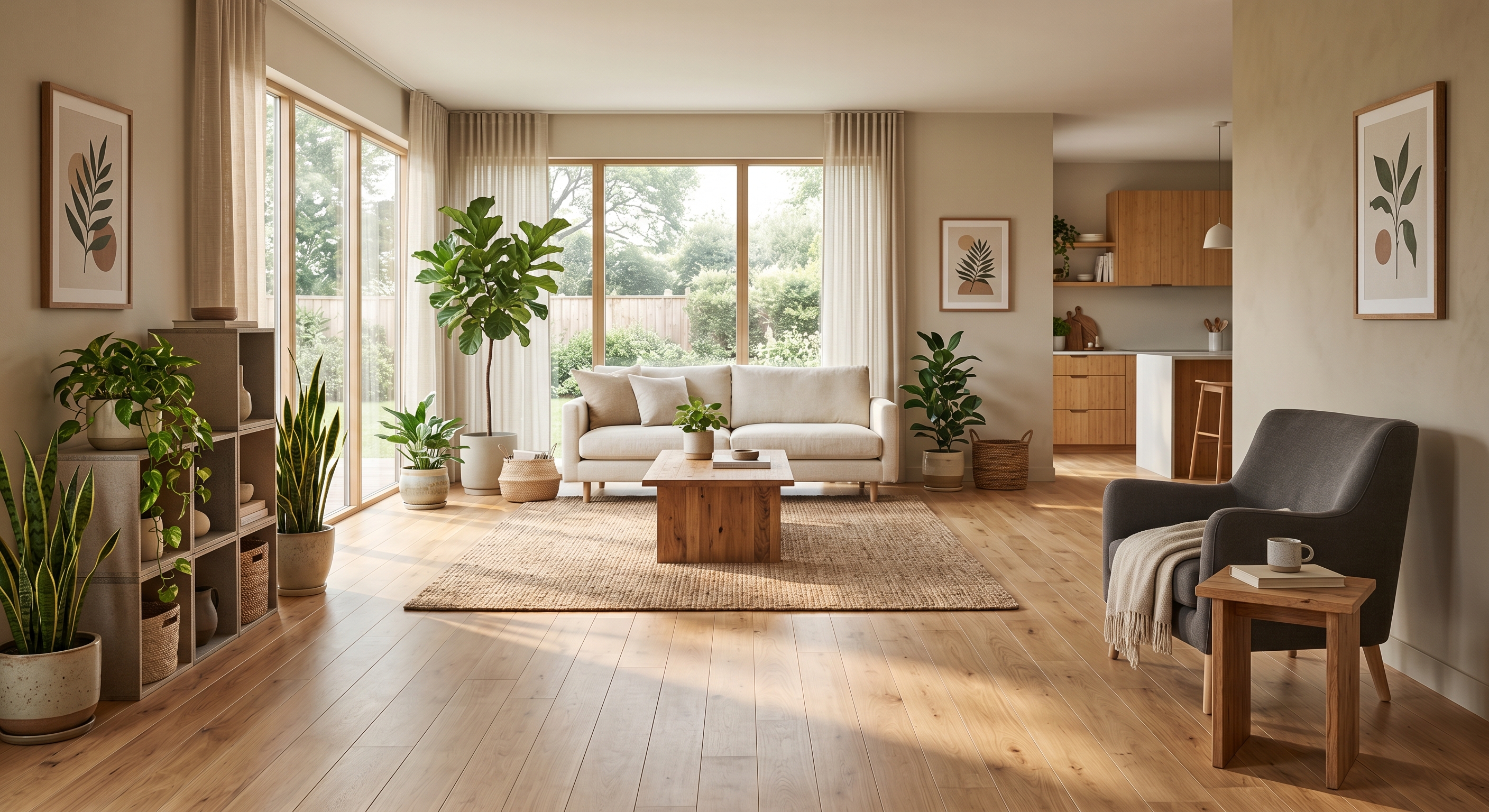
Conscious home design turns living spaces into expressions of personal values, blending aesthetics with purpose to create homes that feel meaningful as well as attractive. This approach moves past simple decoration to build environments that support your ethics, health, and daily life.
A 2025 survey by the Architectural Digest Insights Lab found that 68% of upper-middle-class homeowners aged 35–55 now prioritize design choices that reflect their values, with 72% willing to pay more for sustainable materials and ethical furnishings. This shift reflects a growing movement toward mindful living spaces that support both personal and environmental health. At The Hands-on Home, we’ve seen how thoughtful design choices can transform ordinary spaces into homes that feel as good as they look.
This guide explains the core principles of conscious home design, from choosing earth-friendly materials to selecting decor that lasts. Whether you’re updating one room or building a new home, these strategies help you create a space that truly represents what matters to you.
What Is Conscious Home Design?
Conscious home design is an approach to interior design that connects your living space with your personal values, environmental responsibility, and long-term well-being. It’s about more than just selecting “green” products—it’s a complete way of thinking that considers where materials come from, how they’re made, and how they affect your daily life.
Unlike traditional design, which often focuses only on appearance or current trends, conscious design rests on three key principles:
- Ethical sourcing: Choose materials and products made under fair labor conditions with transparent supply chains.
- Sustainability: Pick materials that are renewable, recycled, or have minimal environmental impact.
- Intentionality: Make deliberate choices that improve both function and emotional connection in your space.
For example, choosing sustainable hardware for cabinets or using low-VOC building materials isn’t just practical—it’s a way to build a home that’s both beautiful and responsible.
Why Conscious Design Matters: The Data Behind the Movement
Research shows that homeowners who embrace mindful living spaces gain benefits beyond appearance. A 2024 study by the U.S. Environmental Protection Agency found that homes with sustainable features like better insulation or non-toxic materials can cut energy costs by up to 30% per year. A Consumer Reports survey showed that 82% of consumers prefer ethically sourced furnishings, even at a higher price.
Beyond practical savings, conscious design creates a deeper connection to home. An article in Dwell noted that intentional interior design—where every piece serves a purpose or brings joy—reduces clutter and increases daily satisfaction. The Japanese concept of wabi-sabi teaches that beauty comes from imperfection and change. Similarly, conscious design encourages us to value the stories behind our belongings, whether it’s a handmade ceramic vase or a reclaimed wood dining table.
Clients at The Hands-on Home often tell us they feel more at peace in spaces designed this way. There’s real satisfaction in knowing your home reflects not just your taste, but your values.
How to Start: The 5 Pillars of Conscious Home Design
Ready to make your home a purposeful sanctuary? Begin with these five core principles:
The 5 Pillars of Conscious Home Design
| Pillar | Key Question | Actionable Step |
|---|---|---|
| 1. Material Integrity | Where do my materials come from, and what’s their impact? | Use FSC-certified wood, recycled metals, or natural fibers like linen and organic cotton. |
| 2. Ethical Production | Who made my furnishings, and under what conditions? | Support brands with fair wages and safe conditions, such as Fair Trade USA or B Corp certified companies. |
| 3. Longevity & Durability | Will this piece last, or will it end up in a landfill? | Choose timeless designs and quality craftsmanship. Skip disposable furniture and look for warranties or heirloom-quality pieces. |
| 4. Health & Well-being | How will this choice affect my physical and mental health? | Use non-toxic paints, low-VOC finishes, and natural light to create a healthier indoor environment. |
| 5. Intentional Aesthetics | Does this piece serve a purpose, or does it bring me joy? | Apply a slow decorating mindset—edit carefully and curate with purpose. |
Choosing Sustainable Materials: A Room-by-Room Guide
The materials you choose set the tone for your entire home. Here’s how to make eco-friendly choices work in every space:
Living Room: The Heart of Conscious Design
Begin with the foundation: flooring. Hardwood is a classic choice, but not all wood is equal. Consider:
- FSC-certified hardwood (oak, walnut, maple) from responsibly managed forests.
- Reclaimed wood for a warm, story-rich look that reduces demand for new timber.
- Bamboo or cork flooring, both rapidly renewable resources.
For upholstery, look at fabrics like:
- Organic cotton or linen, naturally breathable and biodegradable.
- Hemp, which needs fewer pesticides and improves soil health.
- Recycled polyester made from post-consumer plastic bottles.
When selecting furniture, avoid trends. A Mid-Century Modern sofa or a Scandinavian armchair offers clean lines that stay in style, making them sustainable investments. Pair these with sustainable hardware—drawer pulls from recycled brass or handles from ocean plastic.
Kitchen: Where Function Meets Ethics
The kitchen uses lots of resources, but it’s also a place to make meaningful choices. Start with cabinets:
- Plywood or MDF with no added formaldehyde (look for CARB Phase 2 or GREENGUARD Gold certification).
- Bamboo cabinetry, harder than oak and grows up to 3 feet daily.
For countertops, consider:
- Recycled glass or paper composite (e.g., IceStone or Richlite), durable and striking.
- Solid surface materials made from 100% post-industrial recycled content.
- Butcher block from reclaimed or sustainable wood, sealed with natural oils.
Skip non-stick cookware with PFAS (“forever chemicals”) and choose ceramic, cast iron, or stainless steel instead. Pay attention to small details: use natural cleaning products and reusable storage to cut waste.
Bedroom: A Sanctuary for Rest and Recharge
Your bedroom should be a peaceful retreat. Start with bedding:
- Certified organic cotton or linen sheets—conventional cotton is heavily sprayed with pesticides.
- Wool or alpaca blankets, naturally temperature-regulating and biodegradable.
- Mattresses made from natural latex or organic wool, free from harmful chemicals.
Choose solid wood furniture with low-VOC finishes. Add sensory elements like textured rugs, soft lighting, and natural materials such as rattan or jute to create a calming atmosphere. Creating a Sanctuary isn’t just about looks—it’s about designing a space that supports rest.
Bathroom: Where Water and Wellness Intersect
Bathrooms offer many water-saving and non-toxic options. Start with the toilet:
- High-efficiency toilets (HETs) that use 1.28 gallons per flush or less.
- Composting toilets for off-grid or ultra-sustainable homes.
For showers and sinks, choose:
- FSC-certified hardwood or bamboo vanities.
- Countertops made from recycled glass or sustainable composite.
- Low-flow faucets and showerheads certified by Energy Star.
Avoid vinyl shower curtains—they release VOCs—and use organic cotton, hemp, or glass doors instead. Store toiletries in reusable glass containers and choose refillable or package-free products when possible.
Home Office: Design for Focus and Creativity
With remote work growing, the home office is now vital for productivity and inspiration. Choose furniture made from:
- Bamboo or reclaimed wood desks and shelves.
- Ergonomic chairs covered in wool or organic cotton.
- LED lighting with a color temperature that mimics natural light to reduce eye strain.
Add greenery with air-purifying plants like snake plants or pothos to improve air quality and mood. Keep the space tidy to maintain focus. As we say, “Slow decorating isn’t about deprivation—it’s about curation.”
Ethical Home Decor Choices: What to Look For (and What to Avoid)
Not all “green” or “ethical” products are equal. Here’s how to shop wisely:
Certifications to Trust
When buying furniture, textiles, or home goods, look for these third-party certifications:
| Certification | What It Means | Where to Find It |
|---|---|---|
| GOTS (Global Organic Textile Standard) | Certifies organic fibers (cotton, linen) and ensures ethical manufacturing. | Organic bedding, towels, and upholstery. |
| FSC (Forest Stewardship Council) | Ensures wood and paper come from responsibly managed forests. | Furniture, flooring, and cabinetry. |
| Greenguard Gold | Certifies low-emission products, including furniture, paints, and building materials. | Paint, insulation, and home furnishings. |
| Fair Trade Certified | Guarantees fair wages and safe conditions for artisans and workers. | Handwoven textiles, ceramics, and handmade decor. |
| Cradle to Cradle | Evaluates products for material health, recyclability, and renewable energy use. | Furniture, lighting, and home accessories. |
Red Flags to Watch For
Greenwashing is common in home decor. Avoid these warning signs:
- Vague claims: Words like “eco-friendly” or “natural” without proof. Always ask for details.
- Lack of transparency: If a brand won’t say where materials come from or how products are made, shop elsewhere.
- Overuse of plastic: Even if a product is labeled “green,” too much plastic packaging or synthetic materials can undermine its value.
- Fast furniture: Cheap, disposable items often use toxic adhesives, weak materials, and unethical labor. Choose pieces built to last.
For example, a “bamboo” cutting board sounds sustainable, but if it’s bamboo fiber mixed with melamine resin, it’s not as eco-friendly as it seems. Always check the materials list and certifications.
Mindful Living Spaces: Beyond Materials
While materials matter, conscious design is also about creating a home that supports your lifestyle and values in subtle ways.
Design for Connection
Conscious design isn’t just about what you bring in—it’s about what you leave out. Think about how your space can encourage connection:
- A herb bed in the kitchen to encourage cooking and family time. Herb beds remind us of nature’s cycles and the joy of growing food.
- A cozy reading nook with natural light for unwinding or sharing stories.
- An open floor plan that encourages movement and interaction instead of isolating family members.
Embrace Imperfection
Conscious design often aligns with wabi-sabi, finding beauty in imperfection and change. Try:
- Displaying a cracked ceramic vase as a reminder of its history and the repair process.
- Choosing furniture with visible grain or knots to celebrate wood’s natural variations.
- Adding handmade or imperfect pieces that tell a story instead of mass-produced items.
As we emphasize at The Hands-on Home, “A home isn’t a museum—it’s a living space that grows with you.”
Create Rituals
Your home should reflect the routines that bring you joy:
- A dedicated space for morning coffee or tea, with favorite mugs on display.
- A meditation corner with a cushion, candle, and meaningful objects.
- A dining table set for regular family meals where everyone shares food and stories.
These elements ensure your home supports not just daily life, but your well-being.
Case Studies: Conscious Home Design in Action
These real examples show how conscious design works in practice:
Case Study 1: The Urban Eco-Loft
Location: Brooklyn, New York
Square Footage: 1,200 sq ft
Key Design Choices:
- Flooring: Reclaimed oak from a deconstructed farmhouse in upstate New York.
- Furniture: Mid-century modern pieces restored with sustainable hardware and organic linen upholstery.
- Decor: Handwoven baskets from a Fair Trade cooperative in Rwanda, ceramic vases by local artisans, and a herb bed with basil, mint, and thyme.
- Lighting: LED fixtures with warm, dimmable tones to save energy and set mood.
- Paint: Zero-VOC paint in earthy tones that complement the reclaimed wood.
Outcome: The homeowner, a graphic designer, felt more at ease in her space and noticed less stress. The design also sparked conversations with neighbors interested in sustainable living.
Case Study 2: The Rustic Modern Farmhouse
Location: Vermont
Square Footage: 3,500 sq ft
Key Design Choices:
- Structure: Built with locally sourced, FSC-certified timber and straw bale insulation.
- Kitchen: Cabinets from reclaimed barn wood, countertops from recycled glass, and a wood-fired oven.
- Bathroom: A composting toilet, cork flooring, and a vanity made from salvaged wood.
- Outdoor Space: A herb bed and vegetable garden providing fresh produce.
- Decor: Thrifted finds like a vintage quilt and antique milk jugs displayed as functional art.
Outcome: The family discovered that their farmhouse not only reduced their environmental impact but also deepened their connection to the land and community.
Case Study 3: The Minimalist Apartment
Location: Copenhagen
Square Footage: 850 sq ft
Key Design Choices:
- Furniture: Vintage Danish modern pieces and custom storage from reclaimed oak.
- Textiles: Organic cotton curtains and a wool rug handwoven in Nepal.
- Lighting: Solar-powered floor lamps and beeswax candles.
- Decor: A single piece of art—a painting by a local artist—instead of a gallery wall of prints.
- Layout: An open-plan living area with multifunctional furniture, like a sofa that converts to a guest bed.
Outcome: The minimalist aesthetic created calm and spaciousness, while sustainable choices matched the homeowner’s commitment to reducing waste. The space felt both refined and grounded.
Common Mistakes to Avoid in Conscious Home Design
Even with good intentions, it’s easy to make missteps. Watch out for these common errors:
1. Overconsumption in the Name of “Sustainability”
It’s tempting to replace everything with a sustainable version, but that can create waste. Instead:
- Repurpose: Give old furniture new life with a coat of low-VOC paint or new upholstery.
- Thrift: Secondhand stores and online marketplaces offer unique, sustainable finds.
- Borrow or swap: Trade decor with friends or join local sharing networks for items you only need occasionally.
Remember, the most sustainable item is the one you already own.
2. Ignoring the Lifecycle of Materials
Sustainability includes the full life of a material. Ask:
- How will this material age? Will it develop a patina or deteriorate quickly?
- Is it recyclable or biodegradable at the end of its life?
- Can I repair or repurpose it, or will it go to waste?
For instance, a wool rug is biodegradable and lasts decades with care, while a synthetic rug may shed microplastics and end up in a landfill in just a few years.
3. Sacrificing Aesthetics for Ethics
Some assume eco-friendly design means sacrificing style, but that’s not true. Sustainable design can be just as luxurious and visually striking. Choose pieces that resonate with you personally.
A dining table made from reclaimed barn wood can be as stunning as a high-end solid wood table, with the added benefit of its history. Mid-Century Modern furniture often fits sustainable principles thanks to its quality craftsmanship and timeless design.
4. Neglecting Indoor Air Quality
Many conventional materials release VOCs that harm health. To create a truly mindful space:
- Choose low-VOC or zero-VOC paints, adhesives, and finishes.
- Ventilate your home regularly, especially after adding new furniture.
- Add air-purifying plants like spider plants, peace lilies, or snake plants.
- Avoid synthetic air fresheners and use essential oil diffusers or simmer pots instead.
5. Forgetting About the Human Element
Conscious design isn’t just about the environment—it’s about the people living there. A home should reflect your personality and needs. Don’t force yourself into a neutral palette just because it’s “eco-friendly.” Choose natural paints in your favorite colors. Display your treasures proudly instead of hiding them to fit a minimalist ideal.
Conscious Home Design on a Budget: It’s Possible!
You don’t need a large budget to embrace conscious design. With creativity, you can build a mindful home without overspending.
Start with What You Have
Before buying anything new, take stock of what you own. Can you:
- Repaint or refinish furniture to refresh it?
- Repurpose items for new uses (e.g., turn an old ladder into a bookshelf)?
- Swap or borrow decor with friends or family?
A coat of low-VOC paint can turn a thrifted find into a statement piece. Sanding and waxing can restore an old wooden table. Focus on the potential in what you already own.
Shop Secondhand and Vintage
Thrift stores, flea markets, and online platforms like Facebook Marketplace or Etsy are full of sustainable and affordable finds. Look for:
- Solid wood furniture from the 1950s–1980s, often better quality than modern mass-produced pieces.
- Vintage textiles like quilts, rugs, or curtains that have been well cared for.
- Antique lighting like brass lamps or Edison bulb fixtures that add character without new production costs.
Tip: Always inspect secondhand items for damage and ask about their history. A well-loved piece with a story is a hallmark of intentional design.
DIY and Upcycle
Get creative with DIY projects to give old items new life:
- Turn glass jars into storage or vases, decorating with twine or fabric scraps.
- Make furniture from pallets—just sand well and use non-toxic finishes.
- Create your own cleaning products with vinegar, baking soda, and essential oils. DIY natural home scents add luxury without synthetic fragrances.
These projects save money and give your home a unique, personal touch.
Prioritize Multi-Functional Pieces
Choose furniture and decor that serve multiple purposes to maximize space and reduce clutter:
- A storage ottoman that doubles as seating and blanket storage.
- A fold-out dining table that tucks away when not in use.
- A Murphy bed with built-in shelving for a guest room that’s also a home office.
These pieces save space and support slow decorating, where every item has a purpose.
Focus on Small, Impactful Changes
You don’t need a full renovation to make a difference. Start with small, high-impact changes:
- Switch to LED bulbs and smart power strips to cut energy use.
- Set up a compost bin to reduce food waste.
- Use reusable instead of disposable—beeswax wraps instead of plastic wrap, cloth napkins instead of paper.
These changes add up over time.
Inspiration for Every Style: Conscious Design Across Aesthetics
Conscious design isn’t limited to one style. Whether you prefer minimalism, rustic charm, maximalism, or Scandinavian simplicity, you can create a mindful home that reflects your values.
Modern Minimalism
Clean lines and uncluttered spaces work well for conscious design. Focus on:
- Materials: Responsibly sourced concrete, steel, and glass. Look for recycled steel and FSC-certified wood accents.
- Color Palette: Neutral tones in low-VOC paints, with natural textures like wool or linen for warmth.
- Furniture: Simple, functional pieces that prioritize longevity. Consider modular furniture that adapts to changing needs.
A modern minimalist home can feel sleek yet inviting, with every piece serving a purpose.
Rustic and Farmhouse
Rustic styles celebrate natural materials and craftsmanship, fitting well with eco-friendly design. Key elements:
- Materials: Reclaimed wood, stone, and wrought iron. Use salvaged barn wood for flooring or accent walls, and choose local stone to cut transport emissions.
- Color Palette: Earthy tones like warm browns, deep greens, and creamy whites. Use natural clay plaster or lime wash for walls.
- Decor: Handmade pottery, woven baskets, and vintage textiles like quilts or linen curtains. Add a herb bed or indoor garden for greenery.
A rustic farmhouse feels cozy and rooted, with a strong connection to land and materials.
Maximalist Eclecticism
Maximalist spaces are bold and personal but can still be sustainable. Try:
- Materials: Mix vintage and handmade pieces with globally inspired textiles. Choose Fair Trade Certified rugs, local ceramics, and reclaimed wood furniture.
- Color Palette: Rich, saturated colors from natural dyes or non-toxic paints. Layer patterns with vintage fabrics, thrifted art, and plants.
- Decor: Display meaningful collections like travel souvenirs, family heirlooms, or handmade ceramics on open shelving.
A maximalist home feels vibrant and deeply personal, with each item telling a story.
Scandinavian Hygge
The Scandinavian idea of hygge (coziness and mindfulness) pairs well with conscious design. Build it with:
- Materials: Light wood (birch, pine), wool, and linen. Choose FSC-certified wood and organic textiles.
- Color Palette: Soft whites, warm grays, and muted pastels. Use natural light and beeswax or soy candles for ambiance.
- Decor: Layer textures like knit throws, sheepskins, and woven baskets. Add a reading nook, fireplace (if possible), or communal dining area.
A Scandinavian-inspired home feels calm and welcoming, focusing on comfort and connection.
How to Maintain Your Conscious Home Over Time
Creating a mindful home is just the start. Keep it aligned with your values by maintaining it thoughtfully:
Regularly Edit and Reassess
Every few months, ask yourself:
- Does this item still bring me joy or serve a purpose?
- Is it made from sustainable, non-toxic materials?
- Can I repair or repurpose it instead of replacing it?
If not, consider donating, recycling, or repurposing. This slow decorating process keeps your home intentional and clutter-free.
Invest in Quality Over Quantity
When replacing an item, prioritize durability and ethics:
- Will this last for years, or will I need to replace it soon?
- Is it made from materials that can be recycled or composted at end of life?
- Does the brand align with my values on ethics and sustainability?
A well-made piece may cost more upfront but saves money and resources over time.
Stay Informed About Sustainable Innovations
The sustainable design world changes quickly. Keep up with new materials and technologies by following industry leaders, reading publications like Architectural Digest or Dwell, and attending workshops. Watch for:
- New biodegradable materials like mycelium insulation or algae-based plastics.
- Advances in renewable energy for homes, such as solar shingles or geothermal systems.
- Improvements in textile recycling, like fabrics from ocean plastic or agricultural waste.
Staying informed helps you make choices that push the industry toward greater sustainability.
Share Your Journey
Inspire others by sharing your conscious design process. Whether on social media, a blog, or in conversations, your experience can encourage others to make mindful choices. Consider hosting a “swap party” where guests exchange gently used items to reduce waste and build community. Share before-and-after photos to show the power of intentional design.
Final Thoughts: Your Home as a Reflection of You
Conscious home design is a commitment to living intentionally, both in your space and in your life. By choosing eco-friendly materials, ethical decor, and mindful layouts, you build a home that’s as meaningful as it is beautiful.
Remember, the goal isn’t perfection—it’s progress. Small, thoughtful choices add up to a home that reflects your values. Your home should represent who you are, what you care about, and the life you want to live. Whether it’s a minimalist retreat, a rustic haven, or a vibrant eclectic space, the key is to design with purpose.
At The Hands-on Home, we believe great design starts with understanding your values and making choices that honor them. We’re here to guide you at every step, from sourcing sustainable materials to creating spaces that nurture your soul.
Ready to begin? Start with one room, one material, or one value-driven choice. Over time, these small steps will build a home that feels as good as it looks—and a life that’s beautifully aligned with your purpose.
Frequently Asked Questions
What is the difference between conscious home design and sustainable interior design?
While the terms are often used interchangeably, conscious home design is a broader philosophy that includes sustainability, ethics, and intentionality. Sustainable interior design focuses mainly on reducing environmental impact, while conscious design also considers social fairness, health, and emotional connection in your space. For example, conscious design might prioritize fair labor practices and indoor air quality alongside eco-friendly materials.
How do I find ethical home decor brands?
Look for brands that are open about their sourcing and production. Certifications like B Corp, Fair Trade Certified, and GOTS are good indicators. Check brand evaluations on sites like Remake or Good On You, which review fashion and home goods on ethics and sustainability.
Is conscious home design expensive?
It doesn’t have to be. While some sustainable and ethical products cost more, there are many budget-friendly ways to embrace conscious design. Focus on what you own, shop secondhand, and choose quality over quantity. Over time, investing in durable pieces can save money and reduce waste.
How can I make my rental apartment more conscious?
Even in a rental, you can create mindful spaces. Start with reversible changes like painting an accent wall with low-VOC paint, adding plants to improve air, and choosing reusable or thrifted decor. You can also suggest changes to your building, like switching to LED lighting or adding a composting system.
What are the best materials for conscious home design?
The best materials are renewable, recyclable, non-toxic, and ethically sourced. Top choices include:
- FSC-certified wood for furniture and flooring.
- Organic cotton, linen, or hemp for textiles.
- Recycled glass or metal for countertops and decor.
- Natural stone from local quarries.
- Bamboo or cork for flooring and surfaces.
Avoid vinyl, conventional cotton, and tropical hardwoods unless they’re certified sustainable.
How do I balance aesthetics and ethics in conscious home design?
Start by defining your personal style and values, then find materials and pieces that match both. If you love Mid-Century Modern furniture, look for vintage pieces or brands that use sustainable materials in similar styles. Mix high and low—pair an ethical statement piece with thrifted finds to create a space that’s both stylish and responsible.
What role does indoor air quality play in conscious home design?
Indoor air quality is essential in mindful living spaces, as many common materials release harmful chemicals. To improve air quality, choose low-VOC or zero-VOC paints, avoid synthetic air fresheners, and add air-purifying plants like spider plants or peace lilies. Ventilate regularly and consider an air purifier if you live in a polluted area.